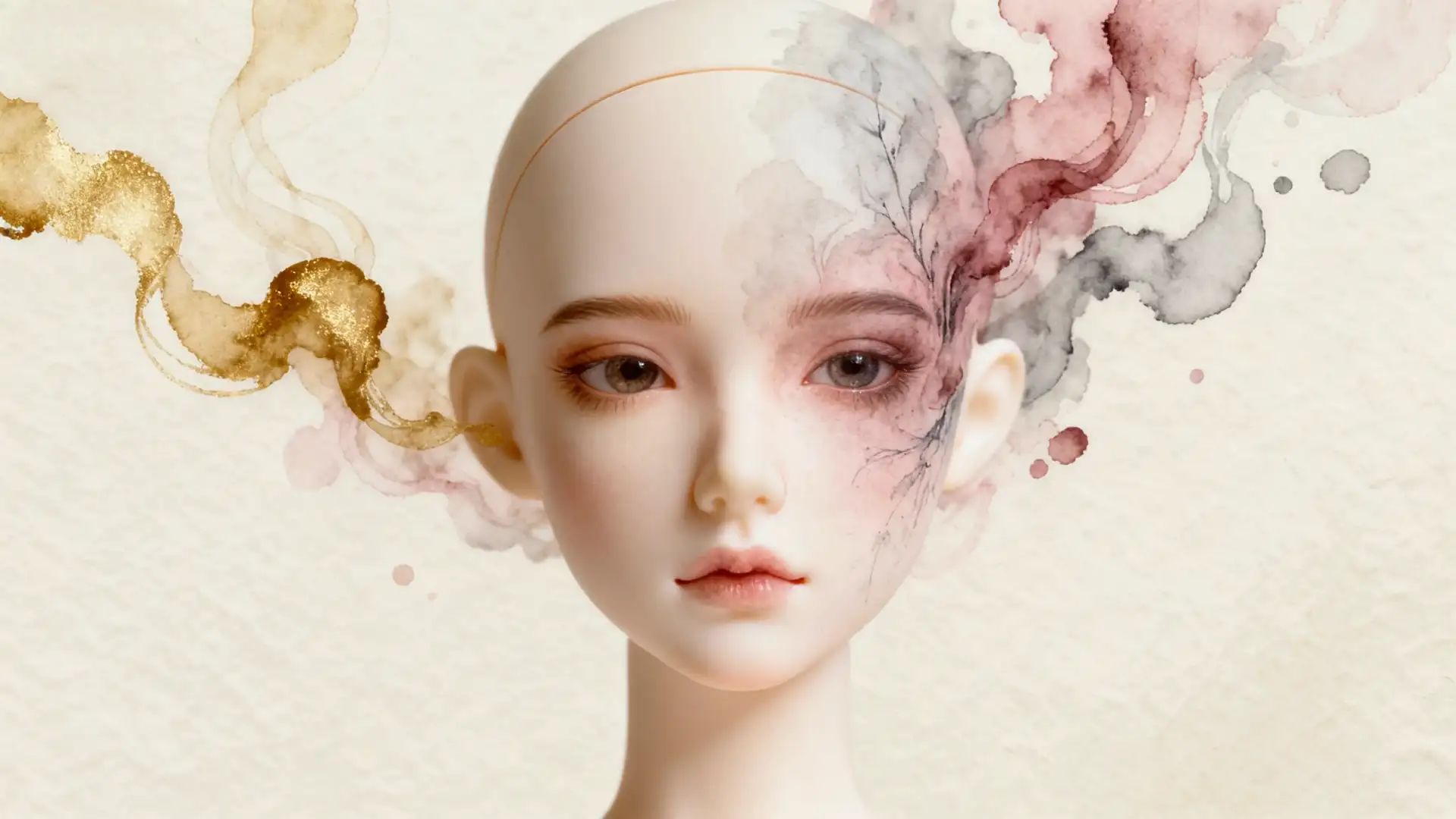
Introduction: More Than a Doll, It’s a Story Waiting to Be Told
I remember my first doll. Twelve years ago, I held that blank, resin head in my hands, a perfect, symmetrical sculpture of nothing. My goal was simple: to make it beautiful. I spent weeks chasing a flawless complexion, an impossibly perfect arch of an eyebrow. The result was technically proficient, aesthetically pleasing, and utterly lifeless. It was a mannequin. That expensive failure was the most important lesson of my career.
I’ve seen too many beginners fall into that same trap. They come to my studio, Doll Atelier Elara, asking the same question: how to customize bjd doll? They expect a list of supplies, a sequence of steps. But I always turn the question back on them: Who are you trying to bring to life? The journey of customizing isn’t about assembling parts; it’s an act of creation, an extension of your own narrative soul into a physical form. The profound connection we feel with these dolls doesn’t come from their price tag or their perfection; it comes from the piece of ourselves we breathe into them. This is the true art, the path from a simple hobby to a profound practice. For those of you just starting this journey, consider this the first step in understanding the world of bjd for beginners.
The Soul’s Blueprint: Before You Touch a Brush
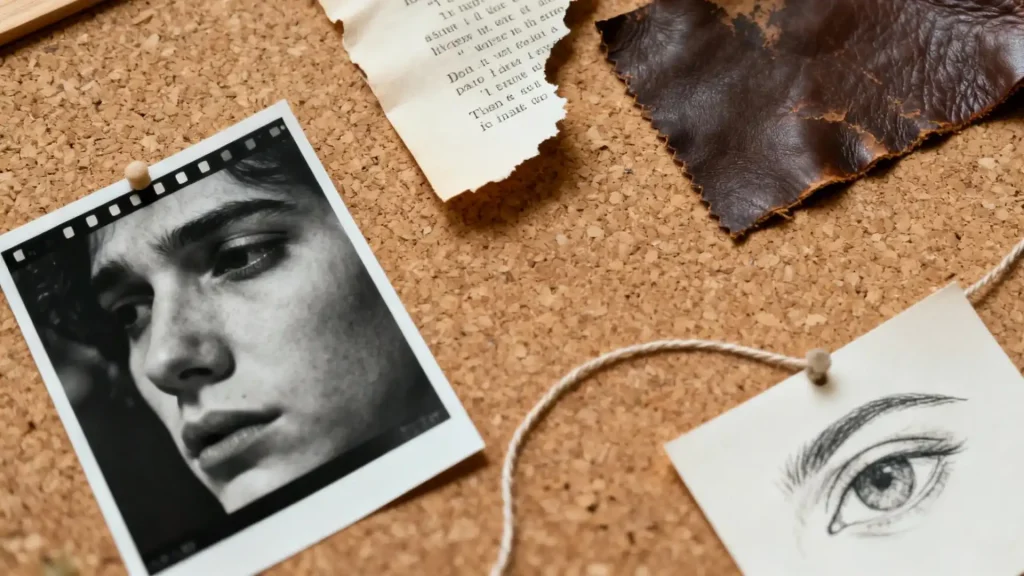
The most critical tool in my studio isn’t a brush or a can of sealant. It’s a corkboard and a stack of pins. Before a single speck of pastel touches resin, I begin with the soul. I call this my Narrative-First Approach. A pretty face is forgettable, but a character with a history, with flaws and secrets, is magnetic.
Your first step is to build their story. Create an “emotional mood board.” This is more than just a collection of pretty pictures. It’s a sensory collage that defines your character. Don’t just look for other dolls for your bjd customization ideas; that’s the fastest path to imitation. Instead, look for:
- A line of poetry: What verse captures their melancholy or their quiet joy?
- A film still: The way light hits a character’s face in a moment of decision.
- A piece of music: Is their soul a frantic violin solo or a low cello drone?
- A texture: Worn leather, brittle lace, cold steel. What does their story feel like?
A truly transformative moment in my work came from a single phrase: “a quiet resilience.” I was designing a doll meant to be a warrior. The easy path was scars and a fierce glare. But “a quiet resilience” led me elsewhere. It led me to soft, tired eyes that had seen too much, a small, determined set to the mouth, and hands that were sculpted to look worn but gentle. The story dictated every choice that followed, from the subtle shading under his eyes to the mended tear in his tunic. The story is your blueprint. Without it, you are merely decorating.
With this blueprint in hand, you are no longer staring at a blank canvas. You are ready to give it a face, the focal point of its soul.
The Faceup: Painting the Soul into Existence
The faceup is where the soul becomes visible. It is the emotional focal point of your entire creation. This is not about applying makeup; it’s about rendering a history onto a three-dimensional canvas. It’s the difference between a doll that is looked at and a character that is felt.
From Generic to Genuine: Avoiding the “Mannequin” Face
I see a pervasive trend among newcomers: the pursuit of the “perfect” face. Symmetrical, flawlessly blended, with large, sparkling eyes and a neutral, pleasant expression. This is the path to creating a beautiful, empty shell. A soul is found in the imperfections.
Cliché vs. Character
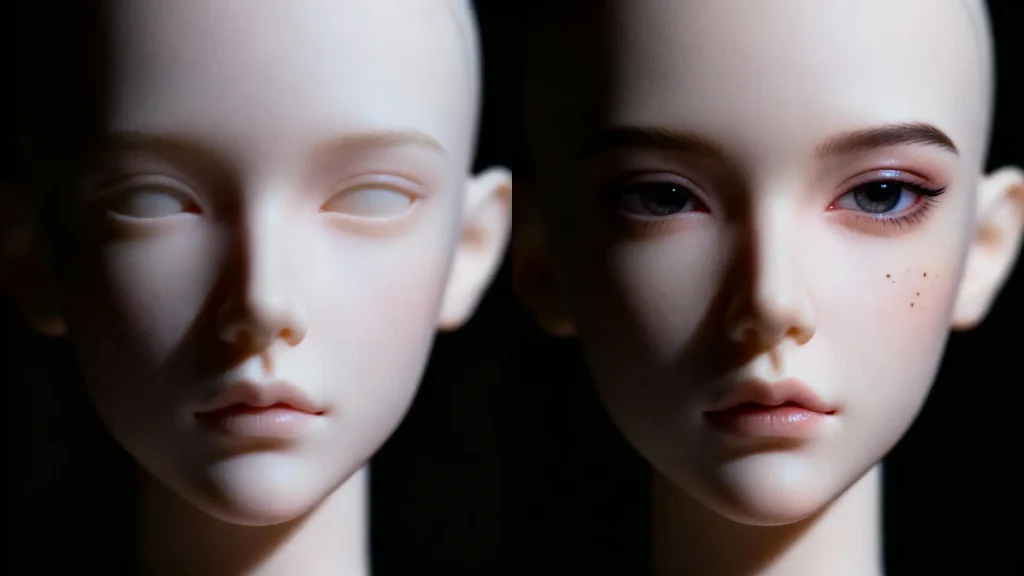
- The Cliché: Perfectly symmetrical eyebrows, airbrushed to a flawless gradient. They are beautiful and communicate nothing.
- The Character: One eyebrow is ever-so-slightly higher, giving a permanent look of subtle inquiry or skepticism. A tiny, healed scar cuts through the arch of the other. Suddenly, there’s a history. What was the fight? Who did they lose?
- The Cliché: A smooth, blemish-free complexion. A doll in a catalog.
- The Character: Faint, sun-kissed freckles across the nose. A slight blueish tint under the eyes, suggesting sleepless nights. A small mole just beside the lip. These are not flaws; they are markers of a life lived.
A moment that truly changed my art was with a doll I couldn’t connect with. She was beautiful, but vacant. I had wiped her face three times. In a moment of frustration, I took the finest brush I owned and added a single, tiny tear mole beneath her left eye. Everything shifted. Suddenly, she wasn’t just pretty; she held a quiet sorrow, a story of loss that was now etched into her being. That one tiny “flaw” gave her a soul. While a good bjd faceup tutorial can teach you the technical skills of blending and lining, only your character’s story can tell you what to paint. This is the essence of creating a truly custom bjd.
Windows to the Soul: The Alchemy of Eyes and Wigs
If the faceup is the soul’s expression, the eyes are its source. The wig is the frame. These elements must work in absolute harmony with the narrative you’ve built. I call this The Principle of Stylistic Cohesion. A photorealistic faceup paired with a cheap, shiny acrylic wig creates a jarring dissonance that shatters the illusion of life.
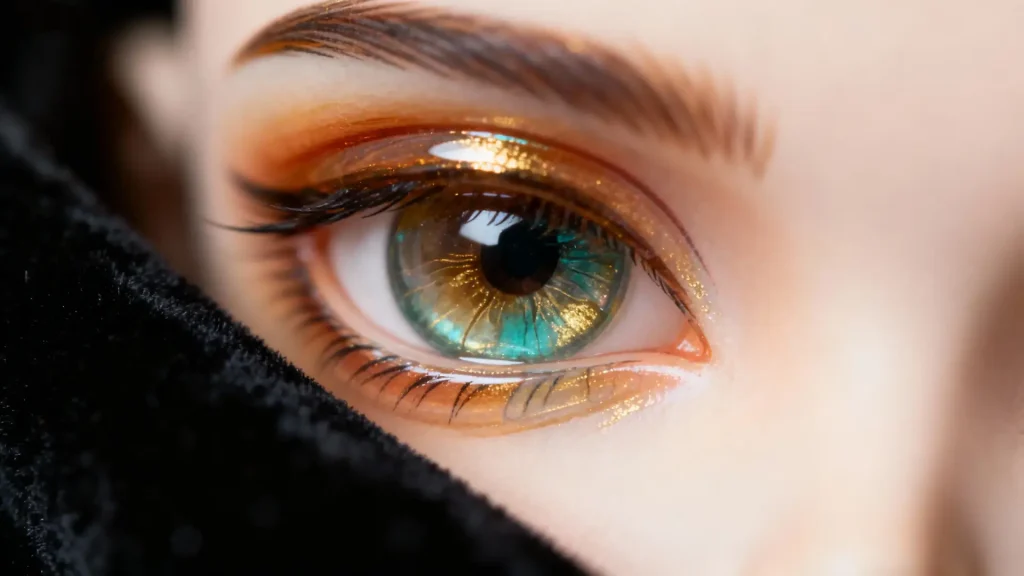
The art is in the selection. When considering your bjd wig and eye options, think about material and its message. Urethane or glass eyes have a depth and realism that lend themselves to subtle, pensive characters. Softer silicone eyes can offer a gentle, soulful gaze. A mohair wig, with its fine, flyaway texture, can suggest a wild spirit or a gentle vulnerability, while a stark, perfectly styled synthetic wig might suit a more severe or artificial persona.
Here is a technique I use constantly in my studio: Never set the eyes to stare straight ahead. This is a classic mannequin gaze. For a more natural, thoughtful expression, tilt them ever so slightly downwards and towards each other (a convergent gaze), as if the character is lost in thought. For a look of shyness or suspicion, turn them slightly outwards (a divergent gaze), as if their attention is divided or they are cautiously observing their surroundings. This tiny adjustment can single-handedly transform a doll from a static object into a dynamic character caught in a moment of time.
Once the soul can see and be seen through the eyes, it needs a world to inhabit. This world begins with the clothes on its back.For a deep dive into selecting the perfect windows to your doll’s soul, see our comprehensive BJD Eye Selection Guide
The Second Skin: Storytelling Through Clothes & Accessories
Clothing is never just clothing. It is the second skin of your character, a direct extension of their history, status, and personality. I call this Wardrobe as Narrative. A pristine, perfectly tailored suit tells a very different story from one with a subtly frayed cuff and a worn lapel. One speaks of power and precision; the other of a long, perhaps difficult, journey.
Don’t just buy a pre-made outfit. Think about how you can alter it, or even better, make a key piece yourself. Learning some basic diy bjd clothes techniques is one of the most powerful skills you can acquire. You don’t need to be a master tailor. Learning to age a garment is more important than learning to sew a perfect seam. A simple leather jacket can be transformed with a bit of sandpaper and acrylic wash, telling a story of countless adventures. A simple linen shirt, when hand-dyed with tea to give it a worn, uneven color, speaks of a humble life.
Elara’s Fabric Safety Quick-Test
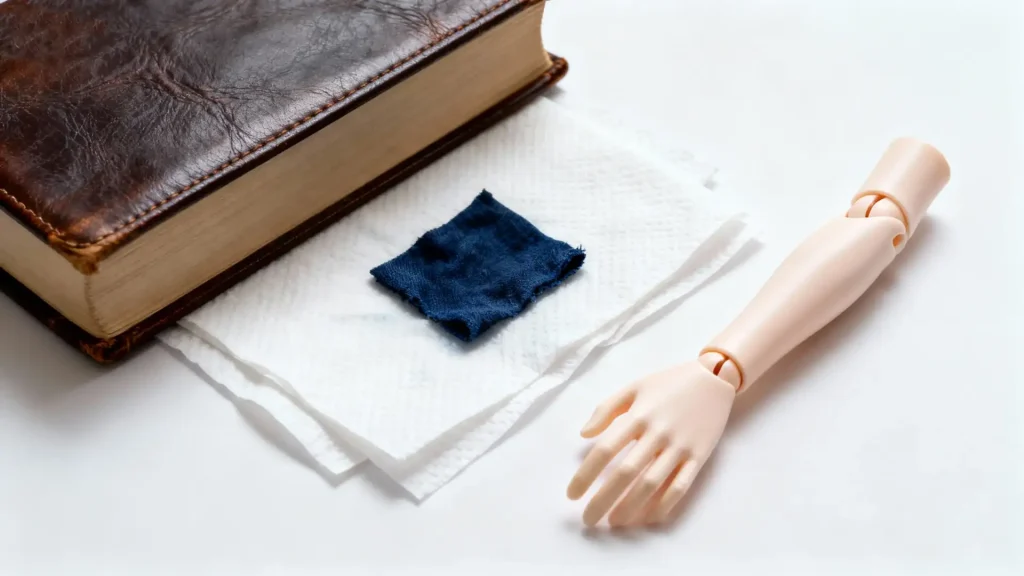
A word of warning born from an expensive mistake that stained a one-of-a-kind doll of mine years ago: dark, rich fabrics can and will stain your doll’s resin over time. Before you dress your character, perform this simple test. Take a small scrap of the fabric, dampen it slightly with water, and press it firmly between two folded pieces of a white paper towel. Place a heavy book on it and leave it for 24 hours. If any color has bled onto the paper, that fabric is a risk. It should not touch your doll’s skin without a protective layer underneath. This simple step can save you from heartbreak. Remember that every detail, from their bjd shoes to their bjd doll clothes, contributes to the final story.
The Alchemist’s Toolkit: Elara’s Curated Essentials
Beginners often believe a vast arsenal of supplies is the key to success. They buy enormous, cheap sets of everything. This is a mistake. In my studio, after twelve years, I find myself relying on a small, curated collection of high-quality tools. These are the things that are truly irreplaceable.
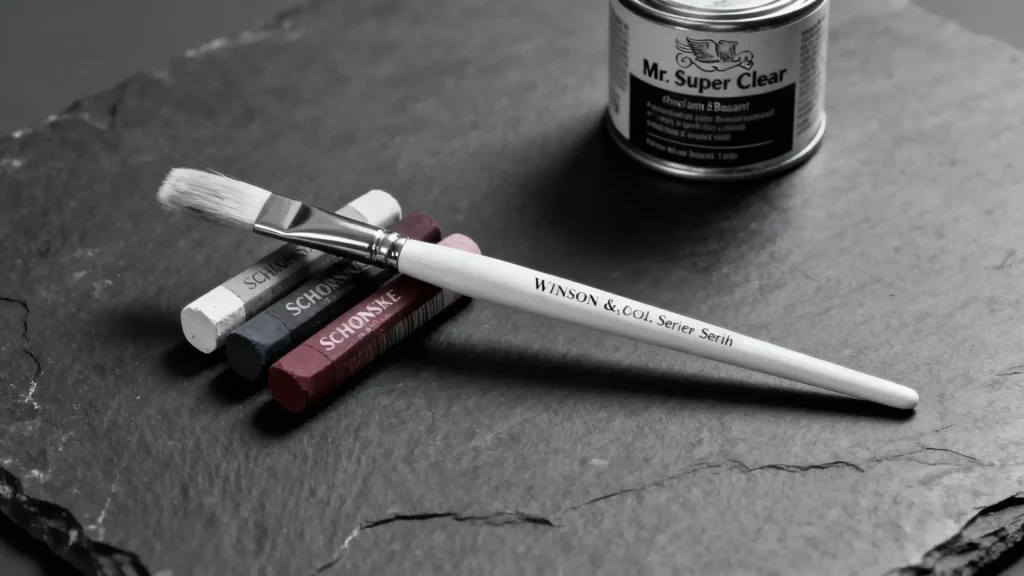
My philosophy is what I call “Minimum Viable Customization.” Invest 80% of your budget into the 20% of tools that do 80% of the work. For me, that is:
- One Small Set of Artist-Grade Pastels: Brands like Schmincke or Rembrandt. These are not just colors; they are the pigments of personality. Their richness allows you to build up the subtle flush of life in the cheeks, the faint shadow of fatigue under the eyes, with a believability that chalky substitutes can never replicate.
- One Perfect Brush: A Winsor & Newton Series 7, size 000. This is my magic wand. It’s the instrument that translates the whispers of your character’s story into the delicate lines of their expression. Without a tool that can respond to your intention with absolute precision, the most beautiful blueprint remains trapped in your mind.
- The Best Sealant You Can Afford: Mr. Super Clear (MSC) UV Cut is the gold standard for a reason. This is more than a protective layer; it is the final alchemical step. It unifies the layers of pastel dust and watercolor, transforming your ephemeral work into a permanent part of the resin. It seals the soul into its vessel.
Everything else is secondary. You can build your collection over time, but a strong foundation with quality tools will respect your art and elevate your results far more than a mountain of cheap supplies.
Conclusion: The Birth of a Soul, The Beginning of Your Saga
We have journeyed far beyond the simple mechanics of applying paint to resin. We have explored the philosophy of creation, the importance of narrative, and the beauty of imperfection. The entire process of customizing your BJD is a transformative act, for both the doll and the artist. You begin with a blank slate, an empty vessel, and through your intention, your story, and your touch, you coax a soul into being.
The doll you create will be a mirror, reflecting the stories you chose to tell and the emotions you dared to explore. It will be a testament not to your technical perfection, but to your capacity for empathy and creation.
Now, go. Don’t just paint a doll. Awaken a soul. Your saga awaits.
BJD for Beginners: The Complete Guide
- A Parent’s Guide to Choosing BJD Dolls for Kids
- Your First BJD: The Ultimate Guide for Beginners (2025)
- What is a BJD Doll? A Guide to Your Next Obsession
- How to Get Into BJD: A Guide From a Long-Time Collector
- BJD Full Set: More Than a Doll, It’s a Story in a Box
- BJD Sizes Explained: The Ultimate Guide to Ball Jointed Doll Dimensions (2025)
- How to Buy Your First BJD: A Step-by-Step Guide for Beginners
- The Resin Guardian’s Handbook: A Lifelong Guide to BJD Care and Maintenance
- Awakening the Soul: A Philosophy for Customizing Your BJD (You are here)
- BJD Accessories Guide: Crafting a Universe for Your Doll
- Joining the BJD Community: Your Warm and Welcoming Guide to Doll Collecting
- Unlocking the Soul: A Beginner’s Guide to BJD Photography Magic
- The Ultimate Guide to Buying & Selling Secondhand BJDs Safely & Smartly
- Navigating Your First BJD: An Empathetic & Realistic BJD Budget Guide for New Collectors
- Ultimate BJD Care Guide: Daily Habits to Prevent Yellowing & Damage
- BJD Eyes: The Ultimate Guide to Bringing Your Doll’s Soul to Life
- Master Indoor BJD Photography: Pro Tips for Magical Shots With Basic Gear
- BJD Unboxing 101: Your Step-by-Step Guide to a Joyful First Look
- BJD Posing Guide for Beginners: Express Emotion Without Damaging Your Doll
- You’re Welcome to the BJD Community: A Guide to Sharing, Learning & Friends
- The Definitive BJD Secondhand Buying Guide: Spot Deals & Avoid Scams