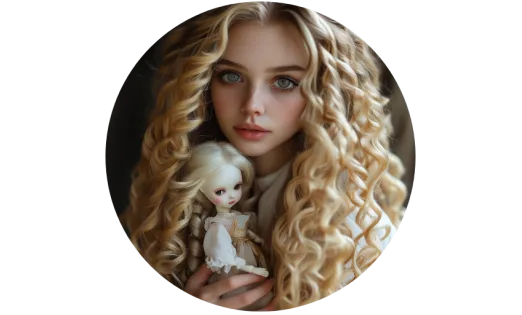
I still remember the scent of fresh resin from my first doll, unboxed over a decade ago. It was a blank canvas—perfectly smooth, flawlessly sculpted, yet utterly devoid of personality. It was beautiful, but it wasn’t mine. Not yet. That journey, from a blank doll to a cherished character with a soul, is the very heart of the BJD hobby. It’s a magic we create with our own hands.
Welcome to the ultimate guide to BJD customization. Forget fleeting trends and copied tutorials. This is a deep dive, shaped by years of trial, error, and triumph. If you’re holding your first doll, feeling a mix of excitement and intimidation, or you’re a seasoned owner ready to push your skills, you’re in the right place. We will transform that beautiful sculpture into a unique individual, a tangible part of your imagination.
This is more than just a hobby; it’s an art form. Let’s begin.
BJD Customization Lingo: A Quick Glossary
Before we dive in, let’s demystify some common terms. Understanding this language is your first step into the community.
- Faceup: The process of painting a doll’s face, including blushing, eyebrows, lashes, and lips.
- Sculpt: The specific model or design of a doll’s head or body, created by an artist.
- Headcap: The removable part of a doll’s head (usually the top or back) that allows access to the eyes.
- Resin: The hard, polyurethane material most BJDs are cast from. Like any material, resin requires care and can be susceptible to issues like breakage and yellowing over time.
- Stringing: The internal elastic cord system that holds the doll’s joints together and allows for posing.
- Sueding: The process of lining the inside of joints with a friction material (like thin suede or hot glue) to improve posing stability.
- Mods (Modifications): Any physical, often permanent, alteration made to the doll’s resin body, such as carving or sculpting.
- Others: Make bjd doll eyes, BJD Wig Styling, BJD Clothing Design,etc.
The Philosophy: Creating Your Character’s Blueprint

Before you pick up a tool, let’s talk philosophy. A BJD is more than a doll; it’s a vessel for a character. Asking “Who are they?” is the first step, but to truly breathe life into resin, we need to go deeper. You are the architect of their soul.
To guide your creative process, create a “Character Blueprint.” This isn’t homework; it’s the most crucial part of your journey. Ask yourself these questions:
- Background & World: Do they come from a cyberpunk dystopia, a high-fantasy forest, or modern-day Tokyo? What is their profession or role in that world? A starship mechanic will have a different presence than a royal court musician.
- Personality & Core: Are they introverted and observant, or boisterous and impulsive? What is their single greatest desire? What is their deepest fear? A character driven by vengeance will have a harder edge than one driven by a quest for knowledge.
- Physical Cues: How has their life marked them? A character who spends their days outdoors might have freckles and a healthy flush. A reclusive scholar might have faint smudges under their eyes and the subtle impression on their nose where glasses sit. A seasoned warrior might carry a network of faint, silvery scars.
To unify these ideas, create a mood board. Use Pinterest or a simple folder on your computer. Gather images for color palettes, makeup styles, atmospheric lighting, clothing textures, and poses. This visual North Star will keep your customization cohesive and prevent you from making choices that contradict your core concept.
Your first practical step, however, is always preparation. You’re starting with a pristine, and often expensive, piece of art. It must be treated with respect. This means ensuring your doll is perfectly clean before any work begins. For a detailed walkthrough on how to clean a BJD doll without damaging the resin, our comprehensive tutorial is your essential first read.

The Soul of the Doll: Mastering the Faceup
The faceup is where you paint the doll’s expression, its emotions, and its very soul. A great faceup can make a common sculpt look entirely unique. For many, this is the most rewarding and artistic part of the process.
Gathering Your Arsenal: Pro Tools and Smart Choices
Walking into an art store can be overwhelming. Let’s cut through the noise.
- Sealant: Mr. Super Clear (MSC) UV Cut Flat is the undisputed industry gold standard. It’s not just about the “tooth.” MSC creates an unparalleled, ultra-fine matte finish. This bonds chemically with the resin. The micro-texture is ideal for grabbing pastel pigments and allows for smooth, buildable layers. The “UV Cut” feature is also critical, adding protection that slows the gradual yellowing of resin. Safety First: This is a toxic aerosol. Always use it in a well-ventilated area—outdoors is best—and wear a respirator mask designed for organic vapors.
- A Note on Alternatives: While MSC is king, other options exist. Testors Dullcote is a popular alternative in the miniatures community, but its finish can be slightly different. No matter the brand, always test on an inconspicuous area (like the inside of the headcap) first.
- Chalk Pastels, Pencils, and Paints:
- Chalk Pastels: A good quality set of soft chalk pastels (not oil pastels!) is your best friend. Brands like Rembrandt or Sennelier are excellent.
- Watercolor Pencils vs. Acrylic Paint: Know when to use each. Use watercolor pencils for buildable, erasable details—like eyebrow sketches, soft lip lines, and freckles. Their semi-transparency allows for subtle layering. Acrylic paint is for high-contrast, opaque, precise final lines. Apply it to the upper eyeliner, sharp lower lashes, or the bright white highlight in the eye. Map out a design with pencils, then go over it with acrylics for a crisp finish.
- Brushes and Tools:
- A variety of small, soft makeup brushes for pastels.
- Tiny detail paintbrushes are essential. Look for “spotter” or “liner” brushes in sizes like 10/0, 5/0, or 000. A quality liner brush should form a perfect, needle-fine point when wet. Synthetic brushes work well with water-based acrylics, since they’re durable and hold shape.
- A kneaded eraser and cotton swabs.
From Steps to Artistry: Core Faceup Techniques
The basic workflow (seal, blush, seal, detail, seal) is the map, but the technique is how you drive. Here’s how to make your faceup “live”:
- Practical Color Theory: You don’t need an art degree. Just remember this: use cool tones—like lavender or soft grey—for shadows under the eyes or to define the philtrum. Use warm tones—peaches, corals, pinks—to bring areas forward and suggest blood flow on the cheeks, nose tip, or knuckles.
- Sculpting with Color: The placement of blush and shadow can completely alter the perceived face shape and expression.
- Youthful/Shy: Concentrate a soft pink or peach blush on the apples of the cheeks and lightly across the bridge of the nose.
- Mature/Chic: Apply a more subdued, brownish-pink blush higher up, along the cheekbones, sweeping towards the hairline.
- Ill/Melancholy: A faint touch of blush placed slightly under the cheekbones can create a gaunt, somber look.
The Artist’s Safety Net: Fixing Common Faceup Mistakes
Every artist makes mistakes. The pro just knows how to fix them. Don’t panic; here’s your guide.
- Problem: My eyebrows are asymmetrical!
- Solution: Before sealing, take your kneaded eraser and gently press and lift the pigment off the pencil line. Don’t rub! This will lift the color without smearing it into the base blush layer.
- Problem: The blush is way too heavy!
- Solution: Take a large, clean, fluffy brush and gently buff the area to blend it out. If it’s still too dark, dip the clean brush in a tiny amount of plain baby powder or translucent setting powder and lightly tap it over the area to mute the color.
- Problem: My painted lash line is wobbly!
- Solution: Brace your painting hand against your other hand or the table for stability. If a mistake happens, let the acrylic paint dry completely. Then, use the tip of a clean, sharp toothpick to gently scrape the mistake away. It will often flake right off the sealed surface.
- Problem: My sealant sprayed on cloudy/white!
- Solution: This is called “blooming” or “frosting,” and it’s caused by spraying in high humidity. The sealant traps microscopic water droplets. Prevention is the only cure: never spray sealant when it’s humid or raining. If it happens, you may have to strip the faceup and start over.
For a complete, step-by-step visual guide, our BJD Faceup Tutorial covers everything from the first layer of sealant to the final gloss highlight.
Beyond the Face: A BJD Modification Guide

Ready to go further? Physical modifications, or “mods,” alter the doll’s sculpt itself. This is the path to a truly one-of-a-kind doll.
Subtle Changes: Sanding and Sueding
These are low-risk, high-reward mods. Wet-sanding seam lines with fine-grit sandpaper (1000+) is key to initial BJD care and maintenance. Sueding or hot-glueing joints adds friction, dramatically improving posing.
Advanced Modifications: Carving and Sculpting
This is where the real transformation happens, but it requires respect for the material.
WARNING: PERMANENT MODIFICATION
Physical modification by carving, sanding, or cutting is PERMANENT AND IRREVERSIBLE. A mistake can permanently damage your doll, potentially reducing its value to zero. ALWAYS practice on spare resin parts or inexpensive recasts before attempting to modify a cherished doll.
- Your Training Ground: Before you touch your doll, get comfortable with your tools. Cheap practice resin parts can be found on eBay, AliExpress, or in dedicated BJD parts shops.
- Dremel Practice: On a scrap piece, practice carving simple straight lines, circles, and triangles. Get a feel for how different speeds and bits remove material.
- Sculpting Practice: Using Apoxie Sculpt, try to replicate an existing detail from your doll, like an earlobe or a fingernail. This is excellent training for your observation and shaping skills.
Body Artistry: Blushing and Tattoos
Don’t let the artistry stop at the neck!
- Body Blushing: Use pastels to add realism to knuckles, knees, elbows, collarbones, and the spine.
- The Sealing Question: Sealing an entire body with MSC is expensive and cumbersome. For body blushing, many artists either leave it unsealed (it will be less durable) or use a brush-on matte sealant like Liquitex Matte Varnish. It provides good protection, though the finish isn’t as flawlessly invisible as MSC. Always test in a hidden area first.
- Tattoos: This is one of the most rewarding bjd customization ideas. For intricate designs, practice on water-slide decal paper first. You can print or draw your design, apply it, and seal it in place. Alternatively, use a very light-colored watercolor pencil to sketch the design directly onto the sealed resin. This gives you a faint guide that you can easily erase before committing with darker pencils or paint.
The Foundation: Stringing and Posing
A doll that can’t hold a pose is just a statue. Learning how to string a BJD is a fundamental skill. If your doll feels loose or its limbs won’t stay in place, it’s time for a tune-up. Our veteran’s guide will walk you through the entire process, from disassembly to achieving that perfect tension.
Dressing the Part: Crafting a Unique Wardrobe
Clothing is the final layer of character. While buying artisan clothes is wonderful, learning how to make BJD clothes yourself, from drafting patterns to the final stitch, offers ultimate creative freedom.
Finding Your Tribe: BJD Community & Inspiration
You are not alone on this journey. The BJD community is vast and full of incredible artists.
- Den of Angels (DoA): The largest and oldest English-language BJD forum. It’s a massive library of information, though it has a steep learning curve.
- Instagram & Pinterest: Use hashtags like #bjdcustomization, #bjdfaceup, and #dollstagram to find a universe of visual inspiration.
- DeviantArt: Still a great place to find high-quality galleries from individual doll artists.
A Note on Community Etiquette: Proper etiquette is key. Before posting a question on a forum, always use the ‘search’ function; your question has likely been answered many times. When sharing photos of your work, always credit the doll company and sculpt name—it’s a fundamental sign of respect for the original artist. Being an active participant who comments and contributes, rather than just asking for help, is the best way to become a valued member of the community.

The Veteran’s FAQ: Your Questions Answered
Here are quick, actionable answers to some of the most common questions.
- Can I use human makeup on my BJD?
- No, absolutely not. Human makeup contains oils and waxes that will stain and permanently damage the resin, even if you try to seal it.
- How long does a faceup last?
- If properly sealed with a quality product like MSC and stored away from direct sunlight, a faceup can last for many years. Minor chips can happen with handling, but the faceup itself is quite durable.
- How often should I restring my doll?
- This depends on how often you pose it. For a doll that is frequently handled and re-posed, you might need to restring it every 1-2 years. For a doll that mostly sits on a shelf, the elastic can last 3-5 years or more.
- How do I prevent my doll from yellowing?
- Yellowing is a natural aging process of resin, but you can slow it down dramatically. The number one rule is to keep your doll out of direct sunlight. Additionally, when not on display, store your doll in its original box or an acid-free storage container. Avoid storage boxes made of clear PVC, as they can off-gas chemicals that accelerate yellowing.
- I’m starting out. What kind of doll should I buy for my first customization?
- This is a key question for beginner bjd customization. I strongly recommend not starting on your $800 dream doll. Some brands like Resinsoul or Doll Leaves are known for offering excellent quality at an affordable price point, making them perfect for beginners. Buying a secondhand “blank head” online is also an extremely economical and practical way to start practicing faceups without fear.
The Journey Never Ends
Your BJD is a dynamic piece of art. A character can evolve. Maybe after a few years, you decide to wipe a faceup and create a more mature version of your character. This ongoing process of creation and bjd doll care and maintenance is what keeps the hobby exciting.
Customization is your dialogue with the doll. It’s a partnership between the sculptor’s vision and your own. It’s the joy of seeing a character you imagined looking back at you from a pair of acrylic eyes. So take a deep breath, gather your tools, and bring your story to life. The magic is waiting.
BJD Customization & Maintenance Series
- Your 2025 BJD Faceup Tutorial: A Pro’s Guide to Soulful Art
- How to String a BJD: A Veteran’s No-Nonsense Guide
- Pristine Resin: How to Clean a BJD Doll The Right Way
- BJD Customization: The Ultimate Guide to Personalizing Your Doll (You are here)
- BJD Body Blushing: The Alchemist’s Guide to Skin That Breathes
- Make BJD Doll Eyes: An Alchemist’s Guide to Painting Soulful Gaze
- BJD Wig Styling Mastery: The Ultimate Care, Cutting & Customization Guide
- The Ultimate BJD Clothing Guide: Design, Patterns & Fit
- Ultimate BJD Storage Guide: Beat Yellowing with Pro Display Ideas
- BJD Faceup Pricing Guide: Unpacking Custom Eye Chips & Lip Blushing Costs
- Bringing Them Back to Life: Your Guide to BJD Restoration Service for Broken Fingers & Yellowed Resin
- BJD Stringing Kits: DIY Tightening for Stable, Pro Posing
- BJD Customization Services: Faceup & Full Body Blushing Guide
- BJD Body Modification: Sculpting Your Doll‘s Unique Form (2025 Guide)
- Mastering BJD Seam Sanding: A Pro’s Guide to Flawless Resin Finishes
- BJD Joint Maintenance: Keeping Your Doll Posing Perfectly for Years
- BJD Eye Well Modification: Achieving Deeper, More Expressive Gaze
- Mastering Advanced BJD Faceups: Beyond Basics to Lifelike Artistry
- BJD Resin Whitening & Anti-Yellowing: A Collector’s Proven Guide to Preserve Beauty
- BJD Stringing Tension Guide: Optimizing Posing & Stability
- BJD Magnet Installation: The Ultimate Safety Guide to Unlocking Dynamic Posing