The Gaze Unveiled: Why BJD Eyes Are More Than Just Orbs
When you first gaze upon a Ball-Jointed Doll, what is it that truly captures your attention, drawing you into their silent world? It’s not merely the exquisite sculpt, the intricate outfit, or the delicate face-up. It’s the eyes. They are the silent storytellers, the windows to a soul that you, the artist and guardian, have painstakingly brought to life. For over a decade, as the “BJD Eye Magician” in our vibrant community, I’ve witnessed countless transformations, from blank stares to captivating gazes, all orchestrated by the careful selection and placement of these tiny, yet monumental, orbs. This guide is born from those years of experience, from every triumph and every lesson learned, to help you imbue your doll with a soul that resonates deeply.
Choosing the right BJD eyes is not a mere accessory decision; it’s an act of creation, a dialogue between your vision and your doll’s potential. It’s about understanding the subtle nuances that turn a beautiful sculpt into a living character. This comprehensive guide will walk you through every facet, from deciphering size charts to mastering safe installation, ensuring your doll’s eyes don’t just reflect light, but reflect a story.
Beyond Size: Understanding the Anatomy of a BJD Eye
Before we dive into the aesthetics, let’s establish a foundational understanding of what makes up a BJD eye. It’s more complex than it appears, and appreciating these components will empower your choices. We’re talking about the diameter, the iris size, the pupil, the dome curvature, and even the sclera (the white part). Each element plays a crucial role in the final expression.
Decoding the BJD Eye Size Chart Guide
One of the most common questions I encounter from newcomers is, “What size eyes does my doll need?” It seems straightforward, but it’s often the first hurdle. The BJD eye size chart guide is your initial roadmap, but it’s not a universal law.
Typically, BJD eye sizes are measured by their diameter in millimeters (mm). Common sizes range from 8mm for tiny Pukifee-sized dolls to 22mm or even 24mm for larger 70cm+ boys or specific sculpts.
Here’s a general guideline, but always consult your doll’s manufacturer specifications first:
- 8mm-10mm: Tiny dolls (e.g., Lati Yellow, Pukifee, some YoSD)
- 12mm-14mm: YoSD, MSD (Mini Super Dollfie), some smaller SD (Super Dollfie)
- 14mm-16mm: Most SD (1/3 scale) girls, some smaller SD boys. My personal experience: A 14mm eye often gives a delicate, slightly wide-eyed look on a 1/4 SD girl, while a 16mm can offer a more mature or intense gaze.
- 16mm-18mm: Most SD (1/3 scale) boys, larger SD girls, some SDGR (Super Dollfie Graffiti)
- 18mm-20mm: Larger SD boys, some 70cm+ dolls
- 20mm-22mm+: Very large heads, specific sculpts designed for oversized eyes.
Crucial Principle: “Better a little too small than too large.”
Why? An eye that is slightly too small can often be made to look natural, perhaps giving a slightly sleepy or demure expression, and can be adjusted with eye putty. An eye that is too large, however, will prevent the eye caps from closing properly, distort the face sculpt, or simply look unnatural and bulging. It’s a common mistake I made early on, trying to force a larger eye for a more dramatic look, only to find it ruined the doll’s profile. Always err on the side of caution.
Beyond diameter, consider the iris size and dome curvature. A larger iris within the same diameter eye will give a more “open” or “awake” look, while a smaller iris can create a more focused or intense gaze. High-domed eyes can give a very realistic, wet look, but might protrude more, whereas flatter domes sit deeper in the socket. Understanding these subtle differences allows for fine-tuning your doll’s expression.
Material Matters: Glass, Acrylic, and Resin – A Deep Dive
The material of your BJD eyes profoundly impacts their appearance, durability, and cost. Each has its unique charm and limitations.
Glass Eyes: The Unrivaled Depth and “Wet” Look
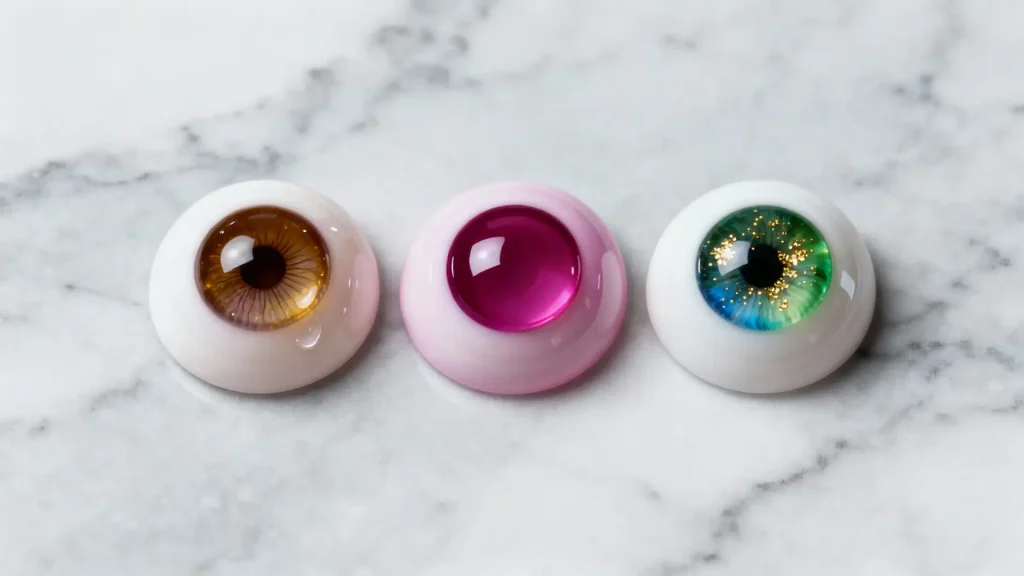
For many, myself included, glass eyes represent the pinnacle of realism and soulfulness. Their unparalleled depth, weight, and “wet” appearance are simply mesmerizing. The way light refracts through multiple layers of glass, often with intricate hand-painted irises, creates a lifelike sparkle that no other material can quite replicate.
- Pros:
- Deep, realistic luster: The inherent properties of glass give a unique translucency and shine.
- Weighty feel: Contributes to a sense of quality and permanence.
- Intricate details: Hand-blown and painted glass eyes can feature incredibly fine iris patterns, subtle color shifts, and even tiny “blood vessels” in the sclera for ultimate realism.
- Durability (scratch resistance): Glass is harder than acrylic or resin, making it more resistant to minor scratches.
- Cons:
- Fragility: They can shatter or chip if dropped or handled roughly.
- Cost: Generally the most expensive option, especially for custom or artisan-made pairs.
- Weight: Can be a factor for very small dolls or if you’re concerned about head weight.
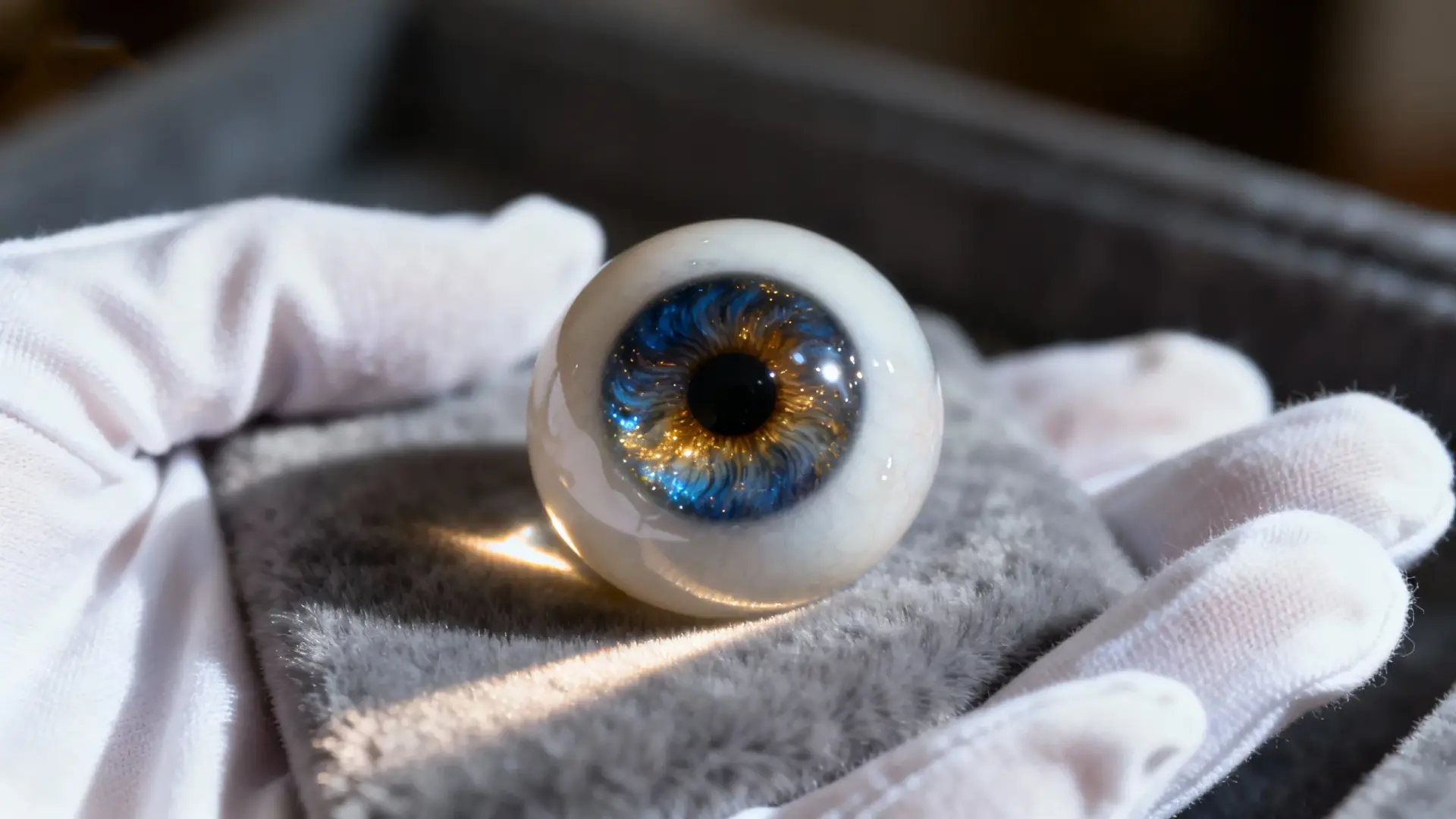
- My Personal Experience: My first pair of custom glass eyes came from a small, independent artisan I discovered on Etsy – let’s call them ‘Luminous Soul Glassworks’. I had been searching for months for the perfect eyes for my Volks SDGr Yuel, a doll with a particularly ethereal sculpt. When the sunlight first caught the intricate, swirling patterns of grey-blue and gold within those glass irises, it was as if Yuel truly awakened. The way the light danced, creating an illusion of moisture and life, was breathtaking. It was a moment that solidified my belief in the magic of glass eyes. They transformed her from a beautiful statue into a character brimming with untold stories.
Acrylic Eyes: Versatility, Vibrancy, and Value
Acrylic eyes are the workhorses of the BJD world, offering a fantastic balance of lightness, durability, vibrant colors, and affordability. They are an excellent choice for everyday play, for dolls with specific aesthetic needs (like anime-inspired characters), or for those on a budget.
- Pros:
- Lightweight: Ideal for smaller dolls or if you want to keep head weight down.
- Durable: Much less prone to breakage than glass.
- Wide color range: Acrylic can be dyed in virtually any shade, allowing for incredibly vibrant and unusual colors.
- Affordable: Generally the most budget-friendly option.
- Easy to find: Widely available from most BJD retailers.
- Cons:
- Less depth: While good, they often lack the profound depth and “wet” look of glass.
- Prone to scratching: Softer than glass, they can scratch more easily.
- Can look “flat”: Some cheaper acrylic eyes might appear less dimensional.
Resin Eyes: The Canvas for Customization
Resin eyes offer an incredible playground for creativity and high customization. If you dream of unique patterns, glow-in-the-dark effects, or specific fantasy designs, resin is often the material of choice.
- Pros:
- Highly customizable: Can be cast with embedded glitter, intricate patterns, gradients, multi-color irises, cat pupils, starbursts, and even glow-in-the-dark pigments.
- Unique designs: Many independent artists specialize in resin eyes, offering truly one-of-a-kind pieces.
- Durable: Similar to acrylic, they are less fragile than glass.
- Cons:
- Potential for yellowing: Over time, some resins can yellow, especially if exposed to UV light. Quality varies greatly, so choose reputable makers.
- Less transparency/depth: While some high-quality resin eyes can achieve good depth, they generally don’t match the natural translucency of glass.
- Bubbles/imperfections: Lower quality resin eyes might have small bubbles or casting imperfections.
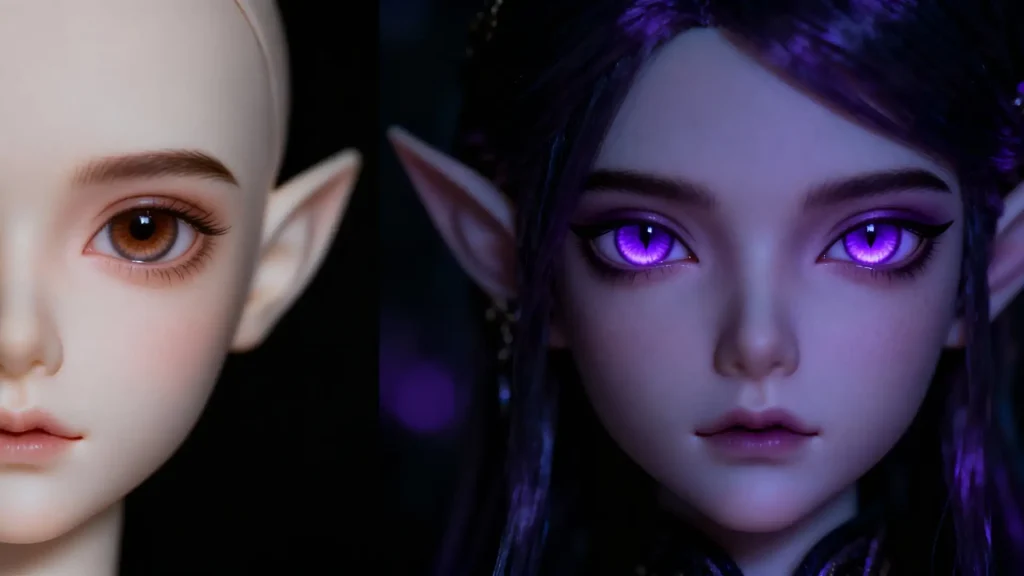
- My Personal Experience: I once commissioned a pair of resin eyes for a dark elf character, specifically requesting a deep violet iris with a subtle, almost imperceptible, silver glitter swirl and a vertical slit pupil. The artist delivered beyond my expectations. The resin allowed for that precise, otherworldly effect that neither glass nor acrylic could achieve with such fidelity. However, I learned the hard way that not all resins are equal; an earlier, cheaper pair for a different doll yellowed significantly after a year, teaching me the importance of investing in quality resin from trusted artists.
The Art of Expression: Choosing Eyes for Personality and Style
This is where the magic truly happens – matching the eyes to the soul of your doll. It’s about more than just color; it’s about the story you want to tell.
Crafting a Lifelike Gaze: The Best BJD Eyes for a Realistic Look
Achieving a truly realistic gaze requires attention to detail that goes beyond simple color choice. The best BJD eyes for realistic look are those that mimic the subtle complexities of human or animal eyes.
- Iris Texture: Look for eyes with intricate iris patterns. Radial filaments, multi-layered colors that blend subtly, and a slight blurring at the pupil’s edge all contribute to realism. A perfectly smooth, flat iris often looks artificial.
- Pupil Definition: A crisp, well-defined pupil is essential. Some realistic eyes even feature a slight “depth” to the pupil, making it appear as a true opening rather than a painted dot.
- Sclera Details: The “white” of the eye isn’t always pure white. Realistic eyes might have a very subtle off-white or cream tone, or even faint, delicate red veins (capillaries) to mimic human eyes. This detail, though tiny, adds immense realism.
- Dome Curvature: A higher dome often gives a more “wet” and lifelike appearance, catching light in a way that mimics natural moisture.
- Recommended Brands/Artists (Examples):
- DOLK (Japan): Known for their high-quality glass eyes, often featuring intricate iris patterns and realistic colors.
- Tinted Glass (Independent Artist): Specializes in incredibly detailed, hand-blown glass eyes with stunning depth and realistic sclera details.
- ‘RealEyes Studio’ (Fictional Example): If I were to recommend a fictional studio, it would be one like ‘RealEyes Studio,’ which focuses exclusively on hyper-realistic glass eyes, often with custom-blended colors and unique iris designs that mimic specific human eye conditions or animal eyes. Their signature would be the subtle, almost imperceptible, ‘limbal ring’ effect – a slightly darker ring around the iris that adds incredible depth.
When selecting for realism, consider the doll’s sculpt. A highly realistic sculpt will benefit most from equally realistic eyes. A more stylized sculpt might look uncanny with hyper-realistic eyes, so balance is key.
Fantasy and Anime: When Your Doll’s Soul is Otherworldly
Not every doll is meant to be a miniature human. Many BJD collectors delve into fantasy, sci-fi, or anime aesthetics, and the eyes are paramount in conveying these unique identities.
- Beyond Human Pupils: This is where resin and acrylic truly shine.
- Cat Eyes: Vertical slit pupils are perfect for feline, reptilian, or demonic characters.
- Goat/Rectangular Pupils: Ideal for certain fantasy creatures or even some alien designs.
- Star Pupils/Geometric Pupils: For magical beings, androids, or characters with unique powers.
- Exotic Colors and Patterns:
- Heterochromia (Odd Eyes): Two different colored eyes instantly add intrigue and a sense of uniqueness.
- Gradient Colors: Eyes that shift from one color to another, like a sunset or a nebula, are stunning for ethereal or magical characters.
- Embedded Glitter/Foil: For a sparkling, magical effect, often seen in resin eyes.
- Swirls and Patterns: Intricate, non-human patterns within the iris can suggest ancient magic, alien origins, or a whimsical nature.
- Glow-in-the-Dark: For creatures of the night or those with supernatural abilities.
- My Personal Experience: I once had a client who wanted to transform her Dollfie Dream into a succubus. We chose a pair of deep crimson acrylic eyes with a subtle, almost imperceptible, black starburst pattern around the pupil. The acrylic allowed for that intense, saturated color, and the starburst added a touch of otherworldly menace without being overtly cartoonish. It was a stark contrast to the realistic eyes I usually work with, but equally effective in defining her character.
The Finishing Touch: A Step-by-Step Guide to a Flawless Installation
You’ve chosen the perfect BJD eyes – now comes the crucial step of bringing them home to your doll. This is where patience, precision, and the right technique make all the difference. A poorly installed eye can ruin the effect, no matter how beautiful the eye itself.
Preparation is Key: Gathering Your Tools and Mindset
Before you even touch the doll, gather your supplies and prepare your workspace. A clean, well-lit area is essential.
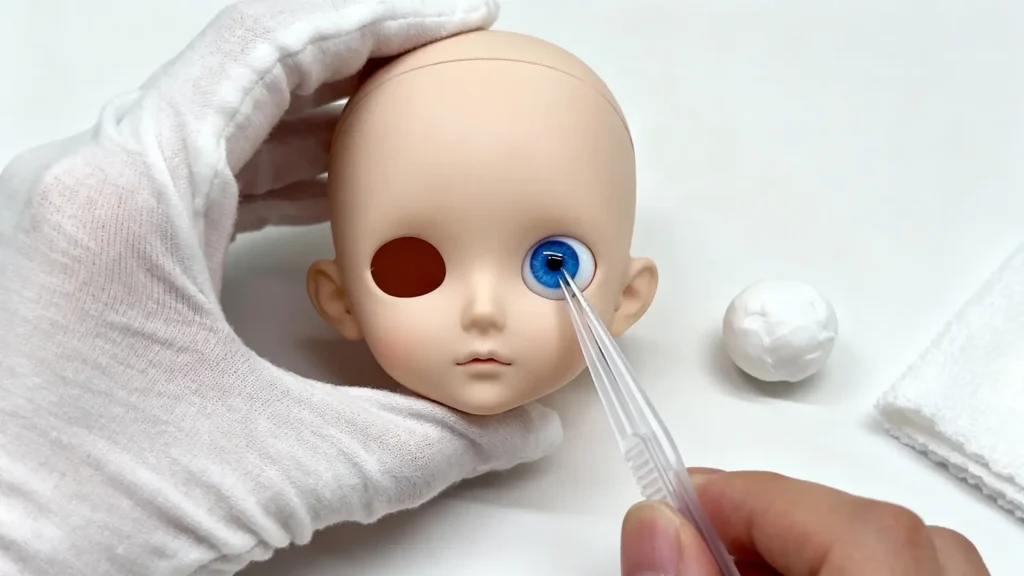
- Eye Putty (or Silicone Eye Sleeves): This is the adhesive that holds the eyes in place. Eye putty is a reusable, non-damaging clay-like substance. Silicone eye sleeves are also excellent, especially for glass eyes, as they provide a soft cushion and hold securely.
- Tweezers: Opt for plastic tweezers or metal tweezers with protected tips (e.g., rubber-coated). Never use bare metal tweezers directly on the eye or inside the head, as they can scratch the eye or damage the resin.
- Soft Cloth/Microfiber Cloth: For cleaning eyes and protecting your doll’s face-up.
- Cotton Swabs: Useful for minor adjustments or cleaning.
- A Magnifying Glass (Optional but Recommended): Especially helpful for precise placement.
- Patience and a Steady Hand: These are your most important tools. Rushing leads to mistakes.
How to Install BJD Eyes Safely: A Hands-On Tutorial from a Veteran
This is the moment of truth. Follow these steps carefully to ensure a secure and soulful gaze.
- Remove the Head Cap: Gently remove your doll’s head cap. Most BJD heads have a magnetic or friction-fit cap at the back or top. Be careful not to scratch the resin or face-up.
- Clean the Eye Sockets: Ensure the eye sockets are clean and free of dust or debris. A cotton swab can help.
- Prepare the Eye Putty:
- Take a small amount of eye putty (about the size of a pea for a 14-16mm eye).
- Roll it into a thin “worm” or a small ball.
- Gently press it onto the back of the eye, around the edge of the iris or pupil, forming a crescent or a ring. You want enough to hold the eye, but not so much that it squishes out excessively.
- Veteran Tip: For glass eyes, I often prefer silicone eye sleeves. They cradle the eye perfectly, provide a secure fit, and are less messy than putty. If using sleeves, simply slide the eye into the sleeve.
- Initial Placement:
- Carefully pick up the eye (with putty attached) using your protected tweezers or gloved fingers.
- From inside the head, gently guide the eye into the eye socket.
- Crucial Safety Note: Before pushing the eyeball fully into the socket, always wrap your finger in a soft cloth or wear a soft glove. This prevents your fingernail from accidentally scratching the delicate resin face-up around the eye socket. This is a lesson I learned the hard way, leaving a tiny, heartbreaking scratch on a custom face-up.
- Positioning and Adjustment:
- Once the eye is loosely in place, look at your doll from the front.
- Use your tweezers or a cotton swab to gently nudge and adjust the eye.
- Focus on:
- Alignment: Ensure both eyes are level and looking in the same direction.
- Depth: Do you want a wide-eyed, alert look (eyes closer to the front) or a more sleepy, demure, or intense gaze (eyes set deeper)?
- Symmetry: Check that the amount of visible sclera (white part) is even around both irises.
- Pupil Direction: Make sure the pupils are centered and looking straight ahead, or subtly off-center if you’re aiming for a specific expression.
- Veteran Tip: Step back frequently. What looks good up close might be off from a distance. Take photos with your phone; sometimes a camera lens reveals asymmetry better than the naked eye.
- Securing the Eye:
- Once you’re satisfied with the placement, gently press the eye more firmly into the socket from the inside of the head. The eye putty will adhere to the resin, holding the eye in place.
- If using silicone sleeves, they will naturally grip the eye and the socket.
- Repeat for the Second Eye: Follow the same steps for the other eye, constantly checking for symmetry and alignment between the two.
- Final Check: Re-attach the head cap. Look at your doll from various angles and in different lighting conditions. Are you happy with the expression? If not, gently remove the head cap and adjust. Eye putty is forgiving!
Common Mistakes and How to Avoid Them:
- Using too much eye putty: This can cause the putty to squish out around the eye, making a mess and potentially interfering with the eye cap. Use just enough to create a secure hold.
- Forcing the eye: If an eye doesn’t fit, it’s too big. Don’t force it, as you risk damaging the head or the eye. Refer back to the BJD eye size chart guide.
- Uneven placement: This is the most common issue. Take your time, use a mirror, and step back to get perspective.
- Touching the face-up: Always be mindful of your fingers and tools around the delicate face-up.
Where to Begin Your Search: A Curated Sourcing Guide from the “Eye Magician”
Now that you’re armed with knowledge, where do you find these magical orbs? The world of BJD eyes is vast, offering everything from mass-produced to bespoke artisan creations.
Where to Buy BJD Glass Eyes and More: Trusted Sources
Finding the perfect pair often involves exploring various avenues. Here’s a breakdown of reliable places where to buy BJD glass eyes and other materials:
- Official BJD Manufacturer Websites (e.g., Volks, Dollfie Dream, Luts, Fairyland):
- Pros: Guaranteed fit for their own dolls, high quality, often offer eyes specifically designed to complement their sculpts.
- Cons: Limited selection, often only available during specific releases or events, can be pricey.
- My Experience: While their selection isn’t huge, Volks’ “Animetic Eyes” for Dollfie Dream are iconic and perfectly designed for that aesthetic. For their SD line, their glass eyes are always top-notch, though I often seek more unique options elsewhere.
- Etsy / Independent Artists:
- Pros: A treasure trove of unique, handmade, and custom-designed eyes. You’ll find incredible glass, resin, and even hand-painted acrylic eyes here. Supports small businesses and individual artists. Perfect for finding that truly one-of-a-kind pair.
- Cons: Quality can vary (always check reviews!), longer production times for custom orders, prices can range from affordable to very high-end.
- My Experience: This is my go-to for truly special pieces. I’ve discovered some phenomenal glass blowers and resin artists on Etsy who create eyes with depth and character you simply can’t find anywhere else. Just be prepared for potential wait times for custom work.
- Specialized BJD Retailers / Proxy Services (e.g., DOLK, Alice’s Collections, Denver Doll Emporium, Legend Doll):
- Pros: Offer a wide selection from various manufacturers and independent artists, often have eyes in stock for immediate shipping, convenient one-stop shopping. Many carry a good range of BJD glass eyes.
- Cons: Prices might be slightly higher than buying directly from the artist, selection is curated by the retailer.
- My Experience: These retailers are excellent for browsing a diverse range of options and for finding popular brands. They often have good sales too!
- BJD Community Marketplaces / Second-hand Markets (e.g., Mandarake, BJD forums, Facebook BJD sales groups, DoA Marketplace):
- Pros: Opportunity to find rare, discontinued, or limited-edition eyes. Often at a lower price point. Great for finding specific brands or styles that are no longer produced.
- Cons: Requires careful vetting of sellers, risk of fakes or damaged goods (always ask for detailed photos and proof of authenticity), no returns.
- My Personal Experience: I once spent weeks scouring the DoA Marketplace for a specific pair of vintage glass eyes – a limited edition from a small Japanese artist that had long since closed shop. It was a true treasure hunt, involving late-night forum checks and careful communication with a seller halfway across the world. When they finally arrived, perfectly preserved and even more stunning in person, the thrill of that rare find was immense. It taught me that patience and diligence in these communities can yield truly irreplaceable gems.
Important Considerations When Buying:
- Customization Period: If ordering custom eyes, be prepared for lead times that can range from a few weeks to several months.
- Return Policy: Understand the seller’s return or exchange policy, especially for handmade items.
- Authenticity: For high-end or rare eyes, ask for proof of authenticity if buying second-hand.
- Communication: Don’t hesitate to ask sellers questions about materials, sizing, or color accuracy. A good seller will be happy to provide details.
Long-Term Care: Preserving Your Doll’s Gaze
You’ve invested time, effort, and love into selecting and installing the perfect eyes. Now, let’s ensure they remain as captivating as the day you installed them. Proper care is essential for maintaining their beauty and longevity.
Protecting Your Doll’s Precious Eyes
Different eye materials require slightly different care, but some general principles apply to all BJD eyes:
- Avoid Direct Sunlight: Prolonged exposure to direct sunlight is the enemy of BJD eyes and face-ups. UV rays can cause resin eyes to yellow, acrylic eyes to fade, and even some glass eyes to lose their vibrancy over time. It can also damage your doll’s face-up. Always store your doll away from direct sunlight, or use UV-protective display cases.
- Gentle Cleaning:
- Glass Eyes: Can be gently wiped with a soft, damp cloth (water only) if they get dusty. Avoid harsh chemicals.
- Acrylic & Resin Eyes: Use a soft, dry microfiber cloth for dusting. If a deeper clean is needed, a very slightly damp cloth with plain water is best. Be extremely gentle, as these materials can scratch more easily than glass.
- Handle with Care: When changing eyes or performing maintenance, always use the recommended tools and techniques. Avoid touching the iris or pupil directly with your fingers to prevent smudges or oils from transferring.
- Eye Putty Maintenance: Eye putty can dry out or lose its stickiness over time. If you notice eyes becoming loose, it’s a good idea to replace the putty. Silicone eye sleeves generally last longer and maintain their grip.
- Storage of Spare Eyes: Store unused eyes in individual, soft pouches or small containers to prevent them from scratching each other. Keep them in a cool, dark place.
By following these simple care tips, you can ensure that your doll’s soulful gaze remains pristine for years to come, continuing to tell its silent stories.
The Soul’s Reflection: A Journey of Discovery
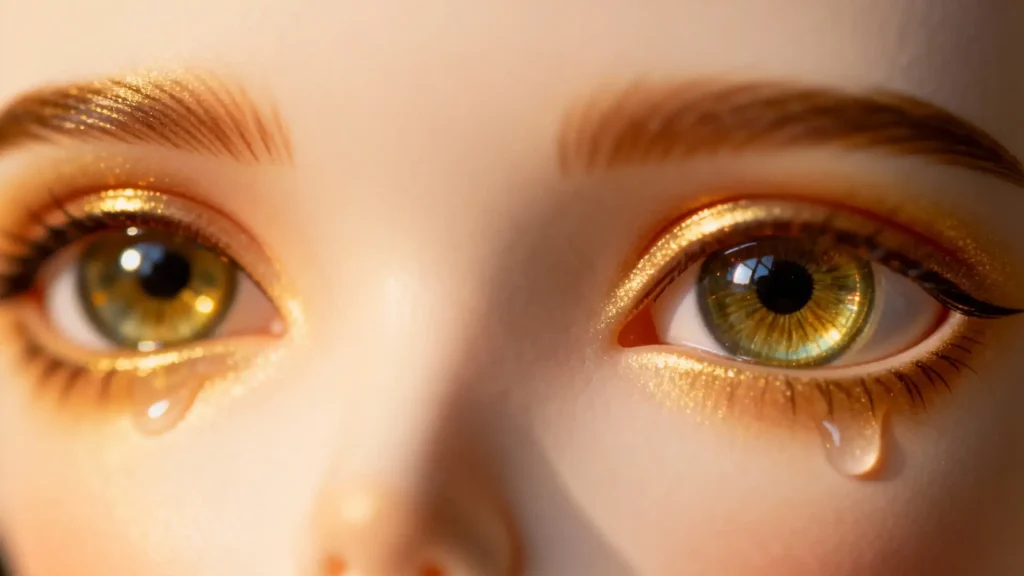
Choosing and installing BJD eyes is far more than a technical task; it’s a profound act of artistic expression. It’s a journey of discovery, a deep conversation with your doll, and ultimately, the moment you truly breathe life into their resin form. Each pair of eyes you select, each careful adjustment you make, contributes to the unique narrative and personality of your beloved companion.
Don’t be afraid to experiment. Your first choice might not be your last, and that’s perfectly fine. The beauty of this hobby lies in the endless possibilities for customization and evolution. Embrace the process, learn from every attempt, and enjoy the immense satisfaction of seeing your doll’s face light up with a gaze that is uniquely theirs.
I invite you, fellow collectors, to share your own “eye magic” stories. What was the most challenging pair of eyes you ever installed? What’s your favorite material? Which eyes truly brought your doll’s soul to life? Let’s continue to inspire each other in this wonderful world of BJD artistry.
BJD for Beginners: The Complete Guide
- A Parent’s Guide to Choosing BJD Dolls for Kids
- Your First BJD: The Ultimate Guide for Beginners (2025)
- What is a BJD Doll? A Guide to Your Next Obsession
- How to Get Into BJD: A Guide From a Long-Time Collector
- BJD Full Set: More Than a Doll, It’s a Story in a Box
- BJD Sizes Explained: The Ultimate Guide to Ball Jointed Doll Dimensions (2025)
- How to Buy Your First BJD: A Step-by-Step Guide for Beginners
- The Resin Guardian’s Handbook: A Lifelong Guide to BJD Care and Maintenance
- Awakening the Soul: A Philosophy for Customizing Your BJD
- BJD Accessories Guide: Crafting a Universe for Your Doll
- Joining the BJD Community: Your Warm and Welcoming Guide to Doll Collecting
- Unlocking the Soul: A Beginner’s Guide to BJD Photography Magic
- The Ultimate Guide to Buying & Selling Secondhand BJDs Safely & Smartly
- Navigating Your First BJD: An Empathetic & Realistic BJD Budget Guide for New Collectors
- Ultimate BJD Care Guide: Daily Habits to Prevent Yellowing & Damage
- BJD Eyes: The Ultimate Guide to Bringing Your Doll’s Soul to Life (You are here)
- Master Indoor BJD Photography: Pro Tips for Magical Shots With Basic Gear
- BJD Unboxing 101: Your Step-by-Step Guide to a Joyful First Look
- BJD Posing Guide for Beginners: Express Emotion Without Damaging Your Doll
- You’re Welcome to the BJD Community: A Guide to Sharing, Learning & Friends
- The Definitive BJD Secondhand Buying Guide: Spot Deals & Avoid Scams