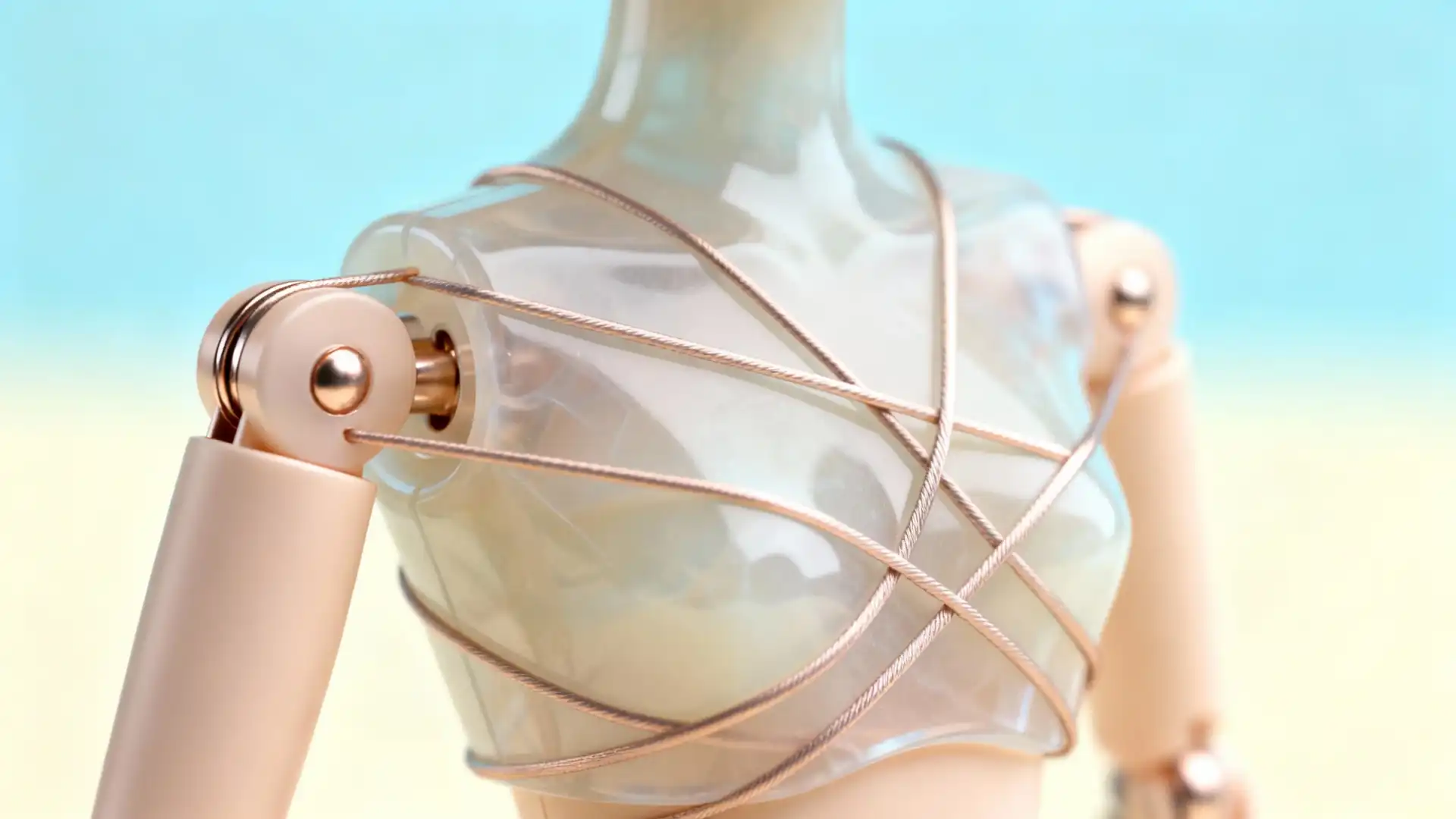
BJD stringing tension is the definitive factor that separates a doll capable of merely standing from a doll that feels like a living, breathing work of art. It is the invisible force that dictates the dynamic beauty of a pose and the absolute security of a standing posture.
If you are reading this, you likely know the basics of how to string a doll. But as a collector, you’ve probably faced the frustration: You spend ten minutes balancing your doll, only for the knees to buckle the moment you walk away. Or perhaps you try to pose a hand near the face, but the arm snaps back down to the side, lifeless.
I have found over my 15 years in the hobby that the problem is rarely the sculpting of the joints; the culprit is almost always the tension.
This guide goes beyond the basics. We aren’t just threading elastic here; we are exploring the “science” and “art” of how to adjust BJD stringing to breathe life into your resin companions. For a curated selection of all these essentials in one package, explore our reviews of the best BJD stringing kits on the market.
Understanding Tension: The “Bone” Structure
To master tension, you must first change how you view the elastic cord within your doll. Think of the elastic not just as a connector, but as the doll’s “muscles.”
If your own muscles are too relaxed, you collapse. If they are constantly cramped and tight, you are rigid and limited in movement. BJD stringing tension works on the exact same principle. It is a delicate act of balancing two often conflicting goals:
- BJD stringing for posing: This requires enough friction to hold a limb in mid-air against gravity, yet enough “give” to allow the joint to rotate smoothly without snapping back.
- BJD stringing stability: This requires a solid core tension that pulls the feet flat against the ground and locks the knees, centering the doll’s gravity.
The “Tighter is Better” Myth & The Ultimate Risk
In my experience, the most common mistake intermediate collectors make is over-tightening. There is a misconception that if a doll is kicky or loose, you must pull the elastic as tight as physically possible. This is dangerous.
⚠️ WARNING: The Risk to Vintage & Expensive Resin
I once saw a rare, 90s-era doll that had been kept under extreme tension for years. The result was heartbreaking: hairline stress fractures appeared just above the ankle S-hook channels.
This is not scaremongering. For antique dolls or those made with “french resin” formulas (which can be brittle), every ounce of excessive force subtracts from the doll’s lifespan. When you feel you need to use brute force to pull the string, STOP. It is not a tension issue; it is likely joint abrasion or a need for sueding. Do not sacrifice your doll’s structural integrity for a tighter pose. If you discover such damage, seeking a professional BJD restoration service is the safest course of action.
BJD Stringing Tension: Symptom Checker & Fix Guide
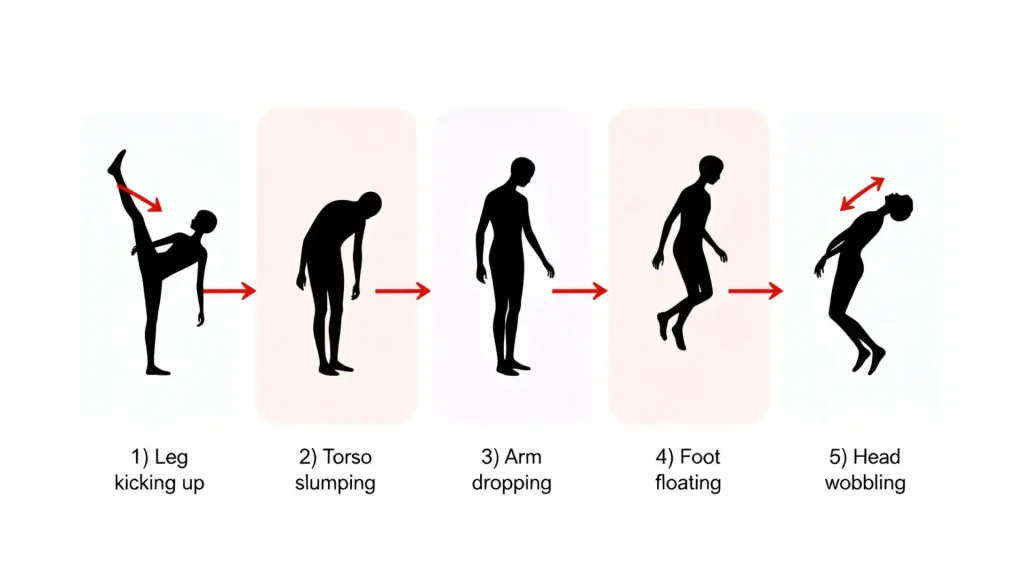
Before picking up a tool, use this matrix to diagnose the exact issue. This structured approach saves time and prevents unnecessary restringing.
| Symptom (The “Patient’s” Complaint) | Likely Cause (Diagnosis) | Expert Solution (Recommended Action) |
|---|---|---|
| The “Kick” (Legs snap straight when sitting) | Leg tension is too high. The elastic is fighting the bend. | Loosen the leg knot by 0.5 inches. Allow the elastic to relax. |
| The “Slump” (Doll collapses at waist) | Torso tension is too loose, or the knot is poorly placed. | Tighten the torso string. Ensure the knot is buried in the hips, not the chest. |
| The “Dead Arm” (Arms drop from poses) | Arm tension is too weak for the weight of the resin hands. | Tighten arm elastic. Pro Tip: Use silicone kips in the shoulder specifically. |
| The “Floating Foot” (One heel lifts when standing) | Uneven tension between Left vs. Right leg. | Re-center the knot in the hip piece. Ensure leg elastic lengths are identical. |
| The “Bobble Head” (Head flops loosely) | Neck tension is too loose or S-hook is too small. | Tighten neck loop slightly. Consider swapping to a smaller, tighter S-hook. |
Zone-by-Zone Fine Tuning Guide (BJD Joint Tension)
1. The Legs: Anchoring Stability
For BJD stringing stability, the legs require the firmest tension, but they must be balanced.
- Technique: I recommend stringing the legs so that when you pull the foot away from the ankle, you have about 1-2 inches of “give” before the resistance becomes difficult.
2. The Torso and Arms: The Art of Expression
This is where BJD stringing tips get specific. Arms need to be tighter than you think to hold poses, but not so tight the shoulders hunch.
- Technique: For the torso, you want “snap.” If you pull the chest up from the hips, it should snap back quickly and audibly. A loose torso is the death of dynamic posing.
3. Head and Neck: The Finishing Touch
A head that holds its gaze is crucial for expression. Once you’ve mastered neck tension, you can further enhance the soulful gaze of your doll by customizing the eyes themselves or even modifying the eye wells for deeper setting.
- Common Mistake: The “Exclamation Mark” Pose.
Do you find that no matter how you pose the head, it slowly tilts backward until the doll is staring at the ceiling? This is often blamed on bad sculpting, but it is usually a hardware error.- The Cause: Using an S-hook that is too long. A long hook acts as a lever; when tension pulls down, the top of the hook hits the resin inside the head and physically forces the chin up.
- Expert Solution:
- Swap the Hook: Use the shortest possible S-hook that can securely grab the head-bar. This eliminates the leverage effect.
- Balance the Load: Ensure the elastic band sits perfectly centered on the S-hook. If the elastic is twisted or bunched on one side of the hook, it creates rotational bias, causing the head to “want” to turn to the side on its own.
Advanced Considerations: Brand-Specific Challenges
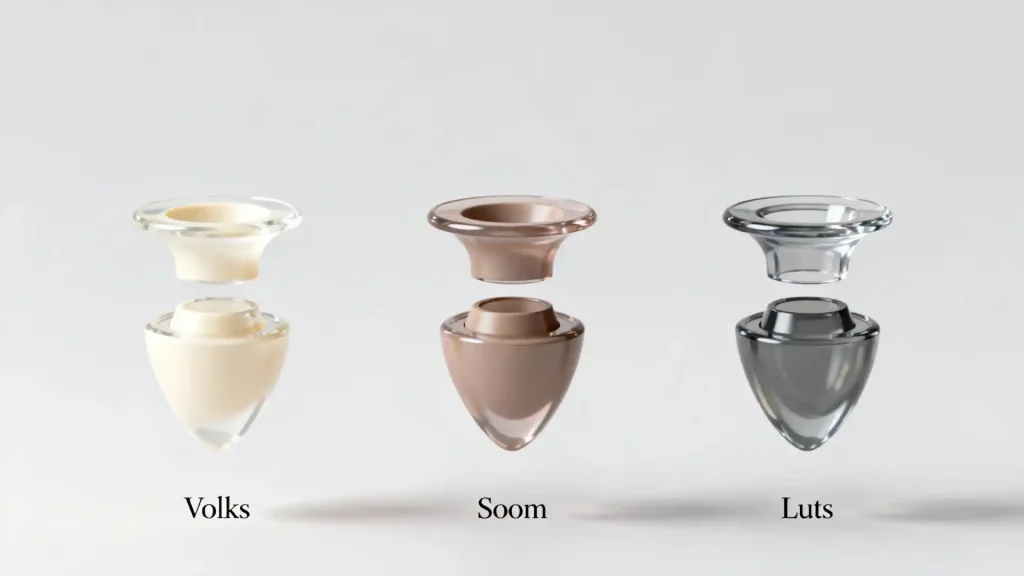
Not all string is created equal, and neither are all dolls. Here is how to handle the contradictions found in specific major brands:
- Volks (Super Dollfie):
- The Engineering: Precision engineered. They often prefer slightly softer tension because their locking mechanisms work efficiently.
- Challenge: Over-tightening a Volks defeats the purpose of their engineering and makes the “clicky” joints grind.
- Solution: Trust the mechanism. Use standard tension and let the KIPS (keep it positioned properly) discs do the work.
- Soom (ID/Super Gem):
- The Engineering: Often heavy, dense resin, especially fantasy parts.
- Challenge: The Heavy Leg Problem. Even with 3.5mm thick elastic, the heavy “giant baby” or fantasy legs can feel weak at the ankles. Simply increasing tension makes the hip joint immobile.
- Counter-Strategy: Layered Reinforcement. Don’t just pull tighter. Install micro-washers (silicone) inside the ankle and knee spheres. This converts the existing tension into grip, rather than just pulling force.
- Luts (Delf/Senior Delf):
- The Engineering: Deep joint sockets designed for range of motion.
- Challenge: The “Rattle.” If tension is slightly loose, or the string is too thin, the joints will rattle echoingly inside the deep sockets.
- Counter-Strategy: Density Matters. Ensure you use elastic with a dense weave. Cheap, loose-weave elastic compresses too much and fails to fill the channel space, causing the rattle.
FAQ: Real World Solutions for Players
Q: “I don’t have professional hemostats or S-hook tools. Can I use tweezers or a safety pin?”
A: Emergency Fix vs. Investment.
You can use them in an emergency, but be extremely careful. Metal tweezers often slip under high tension, and a sharp tip can gouge the resin or stab your hand.
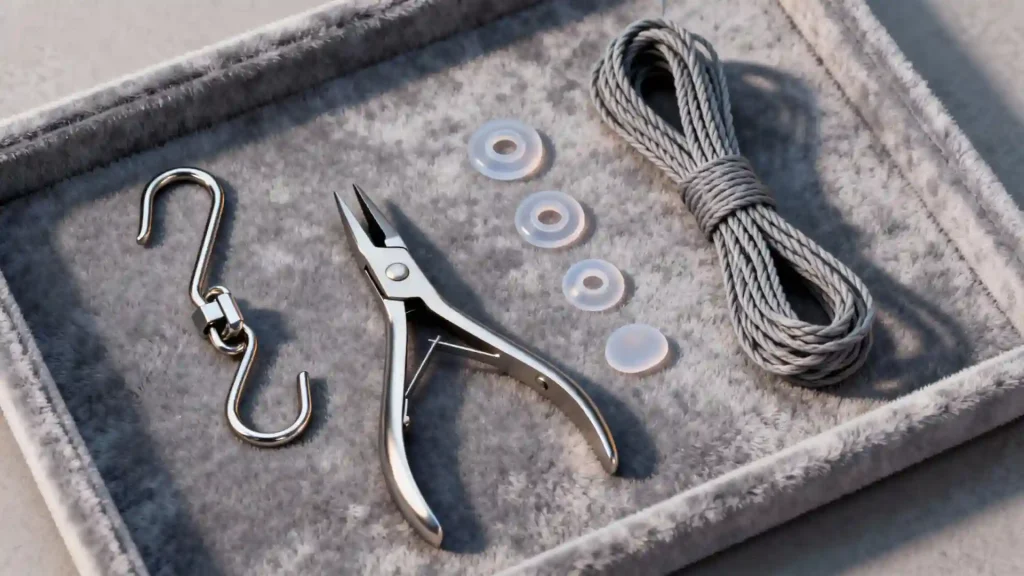
- Better DIY Alternative: Straighten a sturdy paperclip and bend one end into a tiny “J” hook. It is stronger than a safety pin and less sharp than tweezers. However, if you plan to keep your doll for years, a $10 set of proper stringing tools is the best insurance policy you can buy.
Q: “How do I know if the elastic is just loose, or if it’s ‘dead’ and needs replacing?”
A: The 30-Second Memory Test.
This is the key diagnostic tool. Bend your doll’s leg completely (heel to butt) and hold it there for 30 seconds. Release it.
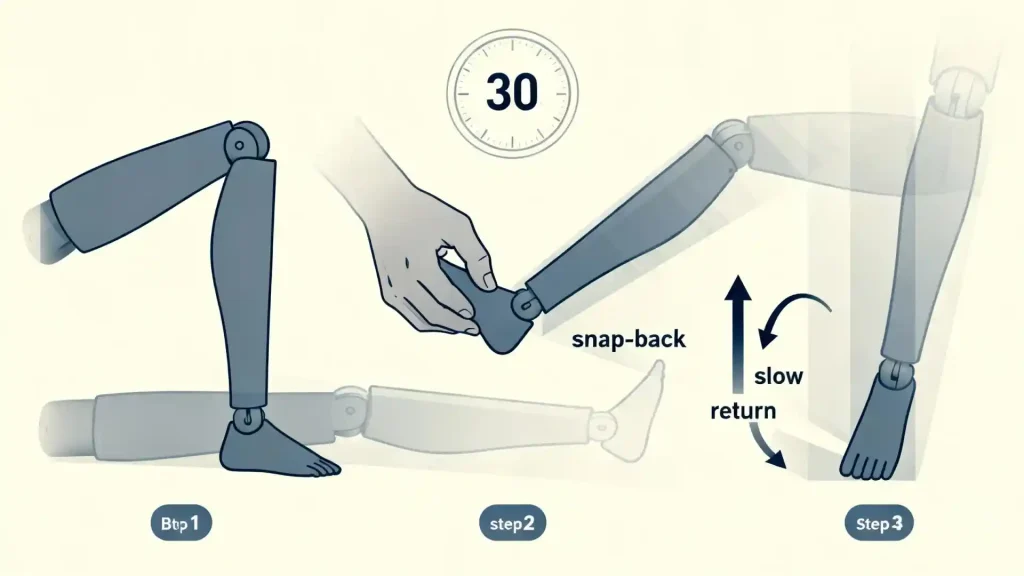
- Good Elastic: Snaps back to straight almost instantly.
- Dead Elastic: Slowly uncurls or stays partially bent.
If it lacks that “snap,” retrying to tighten it is a waste of time. The rubber core has degraded. You need fresh BJD stringing elastic.
Q: “Help! I just re-strung my doll with fresh elastic, but now it’s even stiffer and kicks like crazy. What did I do wrong?”
A: You likely didn’t do anything “wrong.” This is because brand-new elastic has not yet settled. It has maximum bounce. I usually suggest letting a freshly strung doll “rest” in a sitting position for 24 hours to let the fibers relax. If it still kicks after a week, your tension is simply too high—loosen the knot by half an inch.
Q: “I want my doll to do a one-legged stand (yoga pose). How do I adjust for that?”
A: That is the holy grail of balance! To achieve this, you need to slightly over-tighten the supporting leg (the standing one) to create a rigid column. However, acknowledge that this makes the doll less playable for sitting. Tension is always a trade-off.
Summary: The Continuous Cycle
Mastering BJD stringing tension is not a “one and done” task. Elastic degrades. Resin wears. As a collector, you must develop a feel for your dolls.
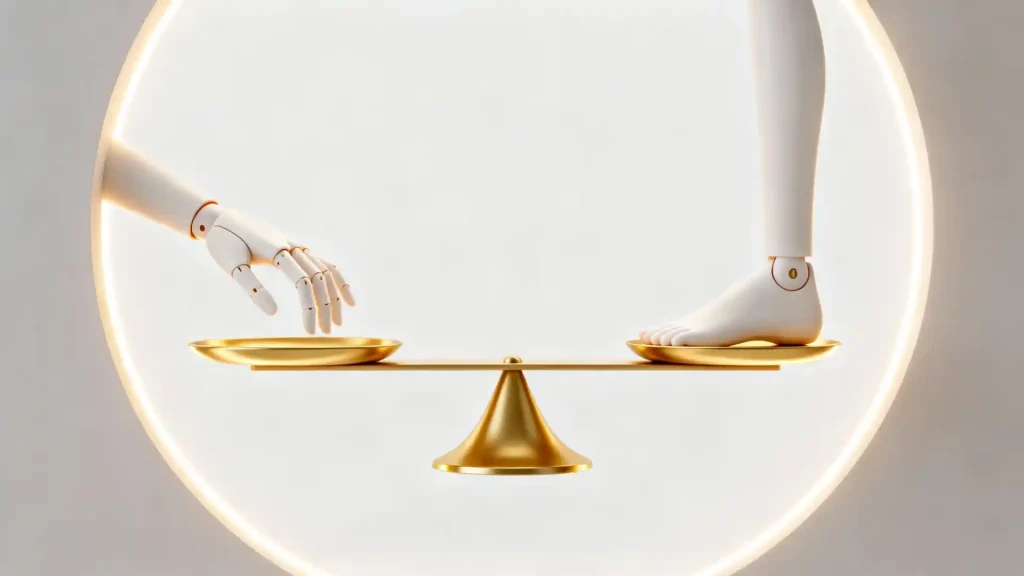
I encourage you to view this maintenance not as a chore, but as a bonding process. When you finally find that “sweet spot”—where the arm holds a pose effortlessly and the doll stands solid as a rock—the satisfaction is unmatched.
Go ahead, pick up your favorite doll. Test their tension. Give them the ability to move as they were meant to. Mastering tension is a profound part of your BJD customization journey. The result will be a doll that feels less like a toy, and more like a character with a soul.
BJD Customization & Maintenance Series
- Your 2025 BJD Faceup Tutorial: A Pro’s Guide to Soulful Art
- How to String a BJD: A Veteran’s No-Nonsense Guide
- Pristine Resin: How to Clean a BJD Doll The Right Way
- BJD Customization: The Ultimate Guide to Personalizing Your Doll
- BJD Body Blushing: The Alchemist’s Guide to Skin That Breathes
- Make BJD Doll Eyes: An Alchemist’s Guide to Painting Soulful Gaze
- BJD Wig Styling Mastery: The Ultimate Care, Cutting & Customization Guide
- The Ultimate BJD Clothing Guide: Design, Patterns & Fit
- Ultimate BJD Storage Guide: Beat Yellowing with Pro Display Ideas
- BJD Faceup Pricing Guide: Unpacking Custom Eye Chips & Lip Blushing Costs
- Bringing Them Back to Life: Your Guide to BJD Restoration Service for Broken Fingers & Yellowed Resin
- BJD Stringing Kits: DIY Tightening for Stable, Pro Posing
- BJD Customization Services: Faceup & Full Body Blushing Guide
- BJD Body Modification: Sculpting Your Doll‘s Unique Form (2025 Guide)
- Mastering BJD Seam Sanding: A Pro’s Guide to Flawless Resin Finishes
- BJD Joint Maintenance: Keeping Your Doll Posing Perfectly for Years
- BJD Eye Well Modification: Achieving Deeper, More Expressive Gaze
- Mastering Advanced BJD Faceups: Beyond Basics to Lifelike Artistry
- BJD Resin Whitening & Anti-Yellowing: A Collector’s Proven Guide to Preserve Beauty
- BJD Stringing Tension Guide: Optimizing Posing & Stability (You are here)
- BJD Magnet Installation: The Ultimate Safety Guide to Unlocking Dynamic Posing