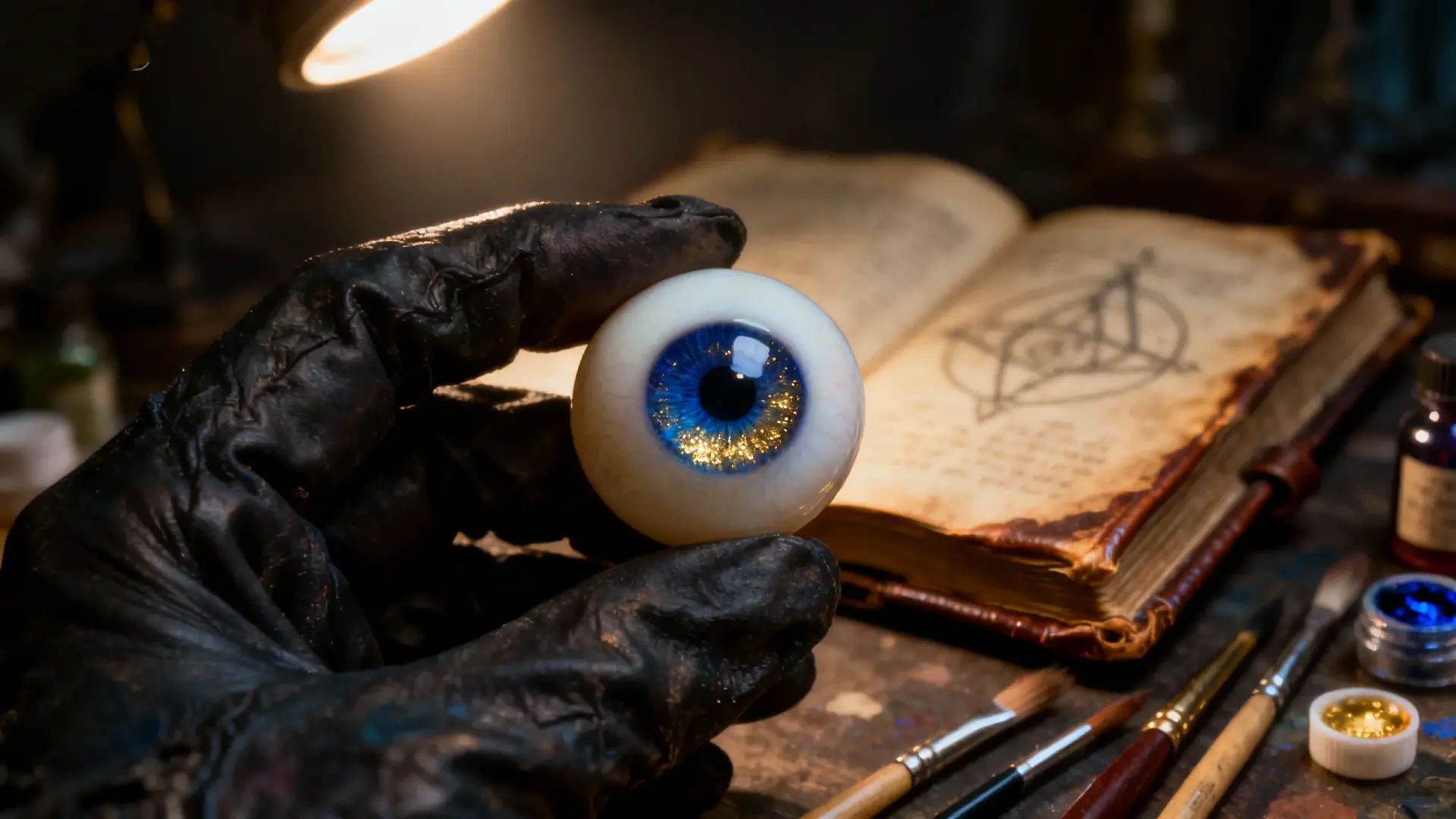
Welcome, apprentice. You stand at the threshold of the most intimate and powerful form of creation in the world of ball-jointed dolls. In my fifteen years of transmuting resin and pigment, I have learned one immutable truth: we don’t paint irises and pupils; we paint blueprints of emotion and stories of light.
I remember a doll that arrived at my sanctum years ago. It was technically perfect, with a flawless face-up, but its gaze was a void. It had no story. I spent a week concocting a pair of eyes for it—not just blue, but the specific shade of a twilight sky after a storm, with a hint of gold in the iris like the last defiant rays of sun. The moment I set them in its head, the doll was transformed. It was no longer just a beautiful object; it was a being with a past, a soul tinged with a gentle melancholy. It seemed to remember things I could never know. This is the power you are about to unlock. Hand-painting a doll’s eyes is not merely a craft; it is the point of ignition, the final dotting ceremony where you breathe a soul into the inanimate. This guide is your initiation, your first grimoire on how to make BJD doll eyes that truly live. Forget fear. We are not just making things; we are awakening them.
The Alchemist’s Sanctum: Tools for Transmutation
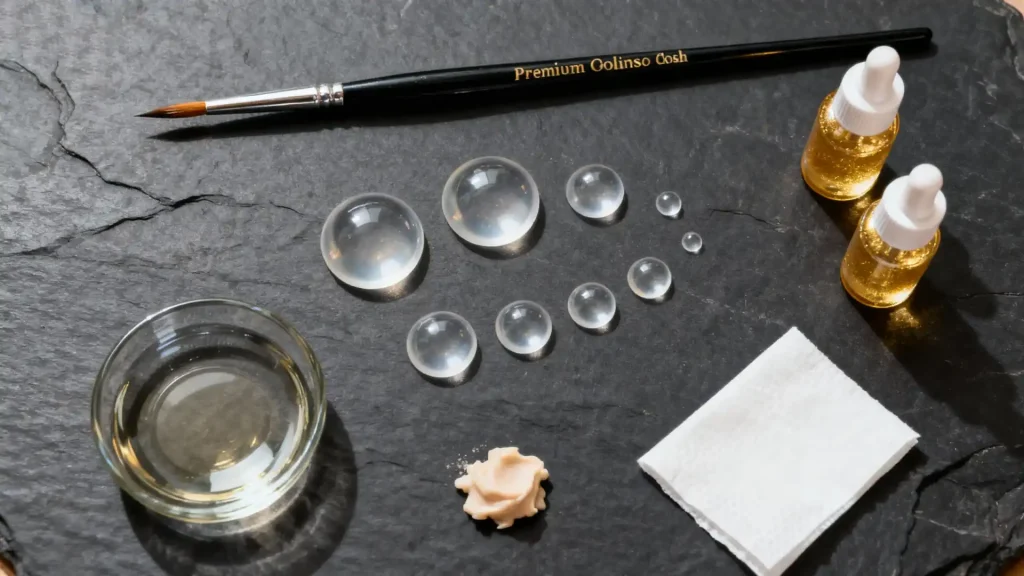
Every alchemist’s laboratory is sacred, filled with the specific instruments needed to channel their will into matter. Your workspace, no matter how humble, is now a sanctum. With your sanctum prepared, we must now turn inward, for the most crucial work happens before a single drop of paint is used.
The Orb of Potential: Your Canvas (Eye Blanks)
Before you can paint a story, you need a page. In our art, this is the eye blank—a clear, dome-topped piece of resin or acrylic that I call the Orb of Potential. It is a universe in waiting. They come in various sizes, and choosing the correct one is the first step in a successful transmutation. This is where our bjd eye blank size guide becomes your first essential incantation:
- 8mm-10mm: Typically for the smallest of dolls, often in the 1/8 scale (like Lati Yellow) or smaller. These require the steadiest of hands.
- 12mm-14mm: The common realm for 1/6 scale dolls, such as YoSD or other similarly sized dolls. This size offers a good balance of challenge and workable space for a beginner.
- 16mm-18mm: This is the heartland of the 1/4 scale (MSD) and smaller 1/3 scale (SD) dolls. It’s the size I most recommend for your first attempt, as it provides a generous canvas for detail.
- 20mm-24mm: Reserved for larger 1/3 scale (SD) and 70cm+ dolls. Working on these feels grand and expressive, allowing for incredibly intricate iris textures.
Choose a size that corresponds to your doll’s specifications. When in doubt, a slightly smaller eye can create a more alert and focused look, while a larger eye can give a softer, more doe-eyed appearance.
The Soul of Color: Your Palette
Pigment is not just color; it is condensed emotion. The question I am asked most frequently is about the best paint for bjd doll eyes. The answer lies in a duel of two philosophies.
- Aqueous Spirits (Water-Based Acrylics): These are the alchemist’s friend. They dry quickly, allowing for rapid layering. I recommend high-pigment fluid acrylics from brands like Golden or Liquitex. In my experience, the key is achieving the perfect consistency. You are aiming for the viscosity of whole milk (or full-fat milk); when you drip it from your brush onto the palette, it should leave a smooth, unbroken trail without pooling too quickly. This is the secret to a streak-free base.
- Oleous Essences (Oil Paints): Oils are the domain of the patient master. They offer unparalleled richness and an extended working time. However, their long drying time and need for special solvents make them a more advanced medium.
My Alchemical Formula: For you, my apprentice, I prescribe the path of Aqueous Spirits. A palette of fluid acrylics in black, white, a primary set (red, yellow, blue), and a few earth tones (like Burnt Umber and Yellow Ochre). With these, you can mix any color your soul desires.
The Wands of Creation: Brushes & Essentials
Your brushes are not mere tools; they are extensions of your fingers, wands that channel your intent onto the orb.
- The Detail Wand (Size 000 to 10/0 Brush): This is your most vital instrument. While synthetics are serviceable, if you are to invest in one true magical artifact, let it be a Kolinsky sable brush. Though costly, its natural elasticity and unparalleled ability to hold a needle-fine point are worth a king’s ransom. It will obey your slightest whim.
- The Foundation Brush (Size 2 or 4 Flat/Round): For laying down smooth, even base coats of color on the iris.
- A Palette: A simple ceramic tile or plastic palette will serve to mix your color formulas.
- Distilled Water: To thin your paints to the perfect “whole milk” elixir.
- Paper Towels: For blotting excess paint and water.
- The Crystalline Seal (High-Gloss Sealant): This is the final, magical step. For a flawless, glass-like dome that magnifies your art, I exclusively use high-quality, non-yellowing UV resin. Brands like Padico’s Star Drop or even high-clarity hobbyist epoxy resins are excellent. A good brush-on gloss varnish is a viable alternative, but the crystal clarity of a quality UV resin is unmatched.
The Blueprint of Emotion: Designing the Gaze Before You Paint
Stop. Do not touch a brush to an eye blank yet. The greatest mistake an apprentice makes is to begin the ritual without a clear intention. A master alchemist does not throw ingredients into a crucible and hope for gold; they follow a precise formula. Your formula is your design.
Choosing a Soul: Innocent, Melancholy, or Fierce?
The soul of the eye is forged from three key elements. By altering their combination, you define the character of your doll.
- The Pupil (The Abyss): Its size is a potent emotional signifier.
- Large Pupils: Suggest innocence, dreaminess, or low-light conditions. They create a soft, gentle expression.
- Small Pupils: Indicate intensity, focus, surprise, or bright light. They can create a fierce, sharp, or even frightened gaze.
- The Iris (The Spectrum of Emotion): The color story you tell.
- Warm Tones (Reds, Oranges, Golds, Browns): Often convey passion, warmth, energy, or an earthy gentleness.
- Cool Tones (Blues, Greens, Violets, Greys): Can evoke calmness, melancholy, aloofness, or a mystical quality.
- The Highlight (The Spark of Life): The shape and placement of the final white dot.
- Single Round Dot: The classic, natural look.
- Multiple Dots: Can create a wetter, more glistening appearance.
- Shaped Highlights (Stars, Hearts, Crescents): Pushes the eye into a more fantastical or stylized “anime” territory.
Combine these elements. A large pupil in a cool blue iris with a single, soft highlight might create a “melancholy dreamer.” A small pupil in a fiery gold iris with a sharp, star-shaped highlight could forge a “fierce warrior.”
Sketching Your Vision
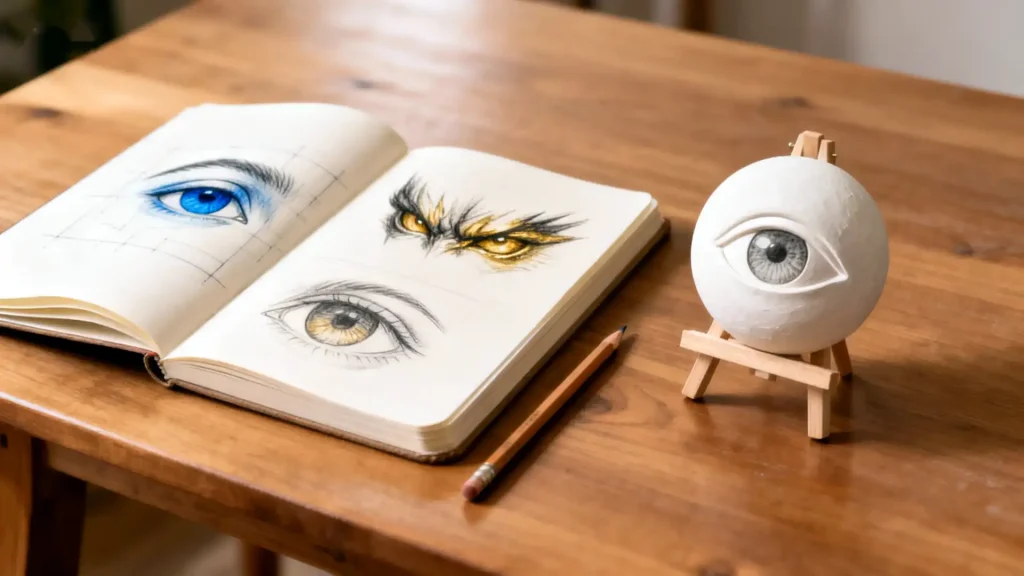
Here is a secret that separates the dabbler from the dedicated artist: we sketch. Always. Before I ever uncap a paint bottle, I draw the eye on paper or on a digital tablet. I create a 1:1 scale circle and design the iris patterns, the pupil size, and the highlight placement. This blueprint allows you to solve problems, refine your concept, and commit your muscle memory to the design before you risk a precious eye blank. Do not skip this step. It is your map through the wilderness.
Now that your blueprint is drawn, it is time to enter the sanctum and begin the ritual of creation.
The Ritual of Creation: A Step-by-Step Guide
The sanctum is prepared. The blueprint is drawn. This process is the answer to the question I hear most: how to make bjd doll eyes that possess a soul, and this bjd eye painting tutorial for beginners will guide you. We will proceed step-by-step, layer by layer, transmuting the blank orb into a window of the soul.
Laying the Foundation: Base Color and Iris
First, we give the eye its fundamental color. Paint the entire back of the eye blank with a solid coat of white or a very light grey. This makes all subsequent colors pop. Once dry, use your foundation brush to paint the basic shape and color of the iris. Build the color in two or three thin, even layers to avoid brush strokes.
Alchemist’s Warning: The novice’s nightmare! A jagged, uneven edge on the iris or a patchy, streaky base color. This immediately shatters the illusion of life.
Emergency Fix: While the acrylic paint is still wet, quickly clean your detail brush and dampen it with clean water. Use the damp tip to gently “push” and smooth the edge of the iris into a clean circle. If the base is streaky, let it dry completely and apply another thin, smoothing layer over the top. Patience is your ally.
The Window to the Soul: Pupil and Highlights
The pupil is the focal point. You can use the tip of your detail brush, but for a perfectly round shape, I often use a dotting tool or even the back end of a paintbrush dipped in black paint. Press it firmly and evenly in the center of the iris. Let it dry completely. The highlight is the final spark. Using pure white paint and your finest detail brush, add the dot or shape you designed in your blueprint. It must be crisp and opaque.
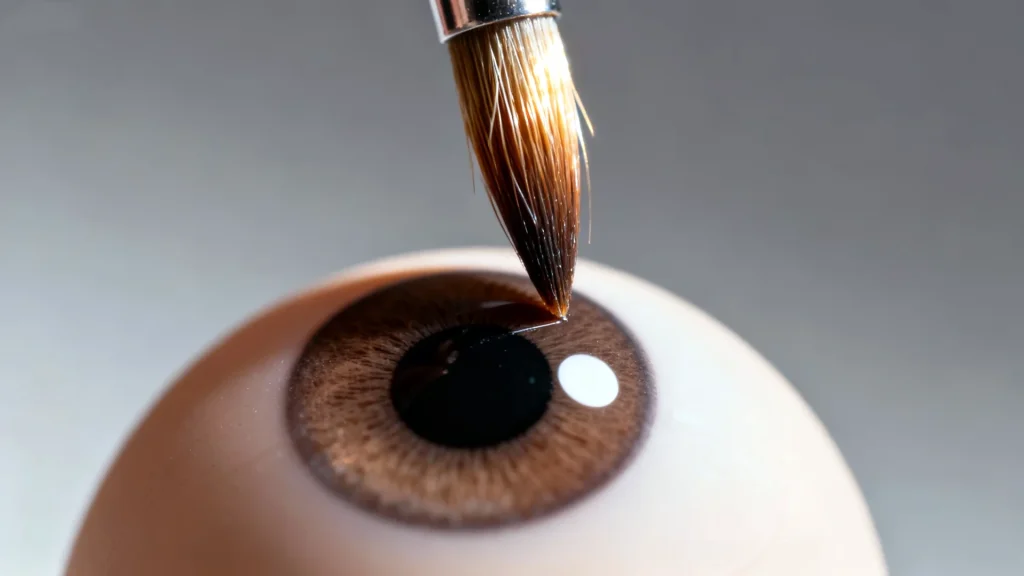
Alchemist’s Warning: Disaster! The highlights are asymmetrical, making your doll look permanently cross-eyed. Or the pupil is off-center, giving it a bizarre, unfocused stare.
Emergency Fix: This is a test of will. Do not try to wipe it. Let the mistake dry completely. Then, using the exact same iris or pupil color, carefully paint over the misplaced highlight or the entire misshapen pupil. It will vanish. Let this cover-up layer dry thoroughly—hours, if need be. Only then can you attempt to re-paint it correctly. The second attempt is always wiser.
Weaving Life: Veins and Iris Textures
This is where true artistry emerges. Using your detail wand, mix a darker shade of your iris color. Begin painting impossibly thin lines radiating from the pupil outwards towards the edge of the iris. Vary their length and thickness. Add a lighter shade for depth. For veins, use a heavily thinned-down red or pink and add just a few squiggly, subtle lines to the white of the eye.
Alchemist’s Warning: The mark of the overeager! You’ve painted thick, clumsy iris striations that look like spokes on a wheel, or you’ve added heavy, red veins that make the eye look bloodshot and horrifying, not delicate.
Emergency Fix: Subtlety is key. If your lines are too harsh, mix a translucent glaze of your iris base color (a tiny bit of paint with more water/medium). Lightly brush this glaze over the harsh lines. It will soften them, pushing them back into the iris and making them appear more natural and layered. For heavy veins, a thin glaze of white can make them recede until they are barely perceptible, which is the desired effect.
The Final Transmutation: Sealing Your Masterpiece
Your painting is complete, but it is still vulnerable. The final transmutation seals your work, protects it, and gives it the depth and gloss of a real eye. This is the critical process of sealing hand painted bjd eyes.
- Preparation: Work in a dust-free area. Ensure your painted eye is completely, utterly dry.
- Application: Apply a generous drop of UV resin to the center of the painted eye back.
- Doming: Use a toothpick or silicone tool to gently guide the resin to the edges of the blank, creating a smooth, even dome. The surface tension will do most of the work.
- Curing: Place the eye under a UV lamp for the time specified by your resin’s manufacturer (usually 60-120 seconds).
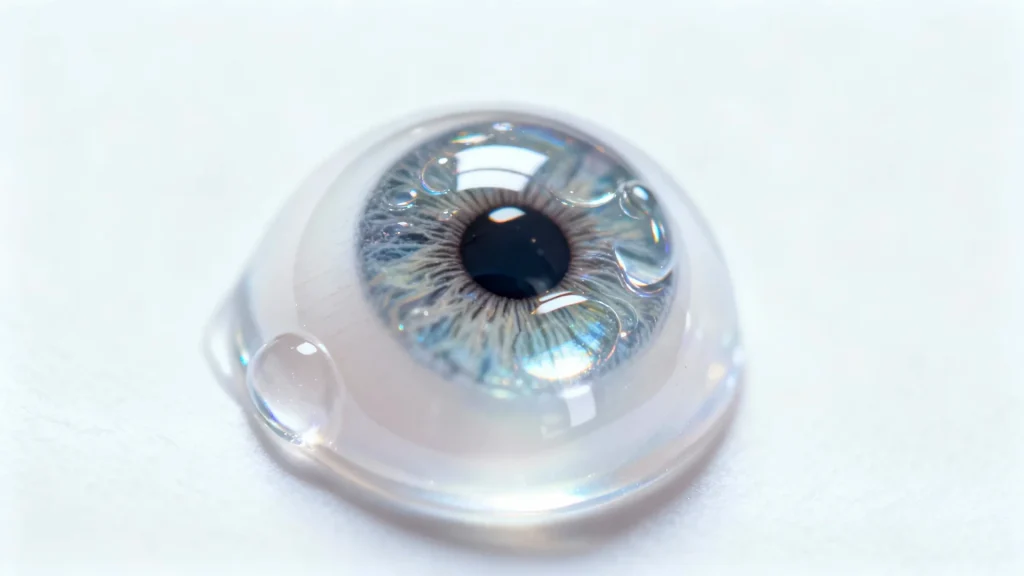
Alchemist’s Warning: The final curse! A perfect paint job ruined by trapped dust particles or air bubbles in the sealant, creating distracting specks and craters in the final lens.
Emergency Fix: Before curing, hold the eye up to a light and inspect it. If you see a bubble, you can often pop it with the fine tip of a needle or toothpick. If you spot a piece of dust, you can try to lift it out with the corner of a piece of sticky tape. If a bubble is discovered after curing, your only recourse is to sand the surface smooth (a difficult task) or, more practically, apply another thin coat of resin over the top, which can sometimes fill and hide the imperfection.
The Enthronement: Installation and Final Gaze
The transmutation is complete. You now hold a pair of Life Orbs. But the ritual is not over until they are enthroned within their vessel. This is the moment of awakening.
The Art of Adherence: Putty vs. Magnets
This final step is where many apprentices falter, but it is a simple art of its own.
- The Way of Putty (Beginner Friendly): This is the traditional and most forgiving method. Take a piece of eye putty about the size of a grain of rice. Roll it between your fingers to warm and activate it. Press it onto the back of your finished eye, forming a small cone. This cone shape helps anchor the eye inside the head. Gently place the eye into the doll’s head socket and use a blunt tool or your finger to adjust the gaze. The putty allows for infinite micro-adjustments. A word of caution: use high-quality white or clear putty, as cheaper, colored putties can sometimes leave an oily residue on your doll’s resin over time.
- The Way of Attraction (Advanced): For those with a bolder spirit, magnets offer a more permanent and elegant solution. This involves carefully gluing a small neodymium magnet to the back of your eye and another inside the doll’s head, behind the eye socket. The benefit is a secure fit and the ability to change the gaze direction with a simple magnetic wand. However, this requires minor modification to the head and precise alignment, so I recommend mastering the way of putty first.
Tending the Flame: Care and Maintenance
Your creations are precious artifacts. To care for them, simply use a soft, clean, and completely dry brush (a fluffy makeup brush is perfect) to gently dust them. Never use any liquid, alcohol, or chemical cleaner on the surface. The sealed dome is a delicate lens; treat it with the reverence it deserves to preserve its clarity for a lifetime.
Conclusion: An Alchemist is Born
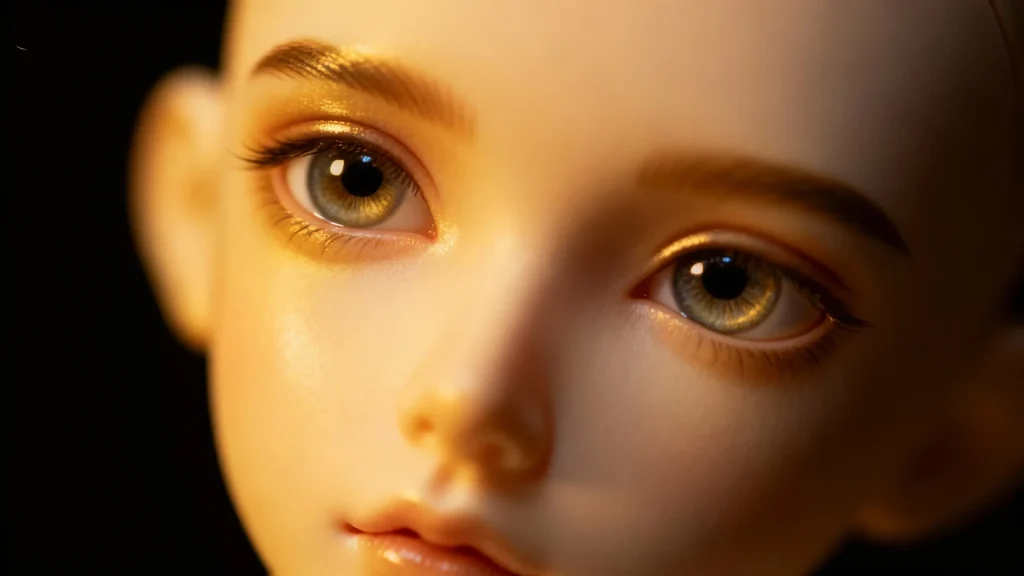
You have walked the path. You have taken a blank, lifeless orb and, through intention, pigment, and patience, have transmuted it into a vessel of emotion. You now hold the fundamental knowledge to make BJD doll eyes.
Look at your creation. It does not matter if it is perfect. It does not matter if you see a dozen “mistakes” that no one else will ever notice. Your first pair of eyes is a testament to your courage to create. You have performed the dotting ceremony. You have participated in the miracle of giving a gaze to the gazeless.
This is a profound achievement. You are no longer just an owner or a customizer. You are an Eye Alchemist.
Now, go forth and create more. With every pair, your hand will grow steadier, your vision clearer. Share your first creation with the world. Post it online with the hashtag #EyeAlchemistStudent. Let your fellow apprentices see your work, for you are now part of our hidden fraternity, a keeper of the flame. Welcome to the Great Work.
BJD Customization & Maintenance Series
- Your 2025 BJD Faceup Tutorial: A Pro’s Guide to Soulful Art
- How to String a BJD: A Veteran’s No-Nonsense Guide
- Pristine Resin: How to Clean a BJD Doll The Right Way
- BJD Customization: The Ultimate Guide to Personalizing Your Doll
- BJD Body Blushing: The Alchemist’s Guide to Skin That Breathes
- Make BJD Doll Eyes: An Alchemist’s Guide to Painting Soulful Gaze (You are here)
- BJD Wig Styling Mastery: The Ultimate Care, Cutting & Customization Guide
- The Ultimate BJD Clothing Guide: Design, Patterns & Fit
- Ultimate BJD Storage Guide: Beat Yellowing with Pro Display Ideas
- BJD Faceup Pricing Guide: Unpacking Custom Eye Chips & Lip Blushing Costs
- Bringing Them Back to Life: Your Guide to BJD Restoration Service for Broken Fingers & Yellowed Resin
- BJD Stringing Kits: DIY Tightening for Stable, Pro Posing
- BJD Customization Services: Faceup & Full Body Blushing Guide
- BJD Body Modification: Sculpting Your Doll‘s Unique Form (2025 Guide)
- Mastering BJD Seam Sanding: A Pro’s Guide to Flawless Resin Finishes
- BJD Joint Maintenance: Keeping Your Doll Posing Perfectly for Years
- BJD Eye Well Modification: Achieving Deeper, More Expressive Gaze
- Mastering Advanced BJD Faceups: Beyond Basics to Lifelike Artistry
- BJD Resin Whitening & Anti-Yellowing: A Collector’s Proven Guide to Preserve Beauty
- BJD Stringing Tension Guide: Optimizing Posing & Stability
- BJD Magnet Installation: The Ultimate Safety Guide to Unlocking Dynamic Posing