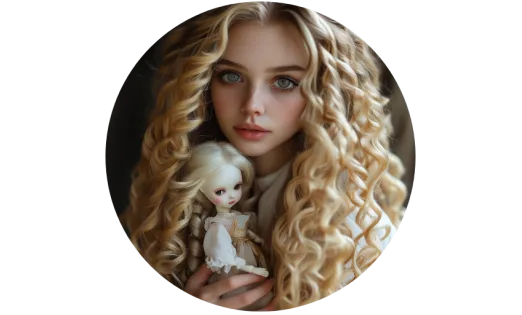
BJD customization is the process of personalizing a ball-jointed doll through styling, painting, body work, posing improvements, and sometimes permanent resin modification. It can include changing eyes, wigs, clothes, and accessories; painting a BJD faceup; adding body blushing or tattoos; restringing and sueding joints; or modifying the sculpt through sanding, carving, magnets, or added parts.
The safest way to customize a BJD is to start with low-risk, reversible changes before moving into advanced work. For beginners, this means starting with eyes, clothes, character planning, and the fundamentals of wig care, wig cutting, and wig customization before attempting faceups, body blushing, or permanent modifications. Resin is beautiful, but it is not forgiving. Good customization starts with a clear idea, safe materials, patience, and respect for the doll.
If you are wondering how to customize a BJD without ruining it, this guide will walk you through the full process: character design, safe tools, BJD faceup basics, body blushing, tattoos, stringing, sueding, removable styling, permanent mods, artist commissions, and long-term BJD doll care and maintenance.
A blank BJD can feel strange at first. The sculpt may be beautiful, the resin may be smooth, and the proportions may be perfect, but the doll may not feel like yours yet. Customization is how that changes. It is the moment when a sculpt becomes a character.
This guide is written for BJD for beginners as well as collectors who are ready to push their skills further. You do not need to do everything at once. You only need to understand what each customization choice does, how risky it is, and whether it supports the character you want to create.
What You’ll Learn
In this guide, you will learn:
- what BJD customization includes
- which customization choices are safe for beginners
- what tools and materials are safe for resin
- how to plan a character before painting or modifying
- how a BJD faceup is built in layers
- how to avoid common faceup mistakes
- how to use body blushing, tattoos, wigs, eyes, and clothing to create personality
- when restringing or sueding can improve posing
- what permanent modifications can and cannot do
- how to work with a faceup artist
- how to care for a customized doll over time
BJD Customization Risk Map
Not every customization has the same level of risk. Before you pick up a brush, sealant, knife, or sanding sponge, understand what can be undone and what cannot.
| Customization Type | Examples | Risk Level | Reversible? |
|---|---|---|---|
| Removable styling | Eyes, wigs, clothes, shoes, props | Low to medium | Yes |
| Surface customization | Faceup, body blushing, freckles, tattoos | Medium | Usually removable, but not risk-free |
| Mechanical tuning | Restringing, sueding, wiring | Medium | Mostly reversible |
| Attached parts | Magnets, horns, ears, armor, 3D printed parts | Medium to high | Depends on attachment method |
| Permanent resin mods | Sanding, carving, opening eyes, reshaping lips, drilling | High | No |
For beginner BJD customization, start with removable styling. If your doll still feels unfinished, move to faceup work. Save permanent resin modification for later, after you have practiced on spare parts or inexpensive legitimate practice heads.
Start Here: What Kind of Customization Do You Actually Need?
If your doll feels like the wrong character, start with eyes, wig, clothes, shoes, and accessories.
If the sculpt feels right but the expression feels blank, start with a new BJD faceup.
If the doll looks too flat in photos, add body blushing, hand blushing, freckles, scars, or subtle shadows.
If the doll cannot hold poses, learn restringing, sueding, or wiring.
If the sculpt itself does not match your concept, consider modifications only after testing on spare resin parts.
If you are unsure, choose the most reversible option first.
This is the best rule for BJD for beginners: change what can be changed safely before changing the resin itself.
BJD Customization Lingo: A Quick Glossary
Before we go deeper, here are the basic terms every collector should know.
BJD: Short for ball-jointed doll. Most BJDs are made from resin and held together by internal elastic string.
Faceup: The painted face of a doll, including eyebrows, eyeliner, lashes, lips, blushing, freckles, scars, and expression details.
Sculpt: The specific head or body design created by a doll company or artist.
Headcap: The removable top or back part of the head that allows access to the eyes and elastic.
Resin: The hard polyurethane material used for many BJDs. Resin can yellow, stain, chip, or scratch if handled poorly.
Stringing: The internal elastic cord system that holds the doll together and allows it to pose.
Sueding: Adding friction material inside joints to improve posing stability. This can be done with suede, silicone pads, or carefully applied hot glue.
Mods or Modifications: Physical changes to the resin, such as sanding, carving, opening eyes, reshaping lips, drilling, or adding magnets.
Body Blushing: Adding pastel, paint, or pigment to the body to create depth, warmth, realism, scars, veins, tattoos, or fantasy markings.
Custom Styling: Non-permanent personalization such as changing eyes, wigs, clothes, shoes, props, and accessories.
The Character Blueprint: Plan Before You Customize
A BJD is more than a doll body and a pretty face. The best customization starts with a character.
Before you buy supplies or book a faceup artist, ask yourself: who is this doll supposed to be?
1. Background and World
Where does the character come from?

A cyberpunk mechanic, a forest spirit, a modern student, a royal musician, and a retired warrior should not all have the same faceup, clothing, posture, and accessories.
Think about:
- time period
- setting
- profession
- social status
- climate
- daily life
- whether the character is human, fantasy, supernatural, or mechanical
2. Personality
What kind of emotional presence should the doll have?
Is the character shy, proud, tired, sweet, dangerous, elegant, playful, lonely, or severe?
A shy character may need softer brows and warmer blush. A noble or villainous character may need sharper brows, cooler shadows, and a more controlled mouth.
3. Physical Cues
How has life marked this character?
A character who works outdoors may have freckles, warm skin tones, rough hands, and sun-kissed blushing. A scholar may have tired eyes and softer lips. A warrior may have scars, healed scratches, or body marks.
Physical details make a doll feel lived-in.
4. Mood Board
Create a simple mood board before starting. Use references for:
- brow shape
- lip color
- eye makeup
- skin tone
- scars
- tattoos
- hair texture
- clothing fabric
- lighting
- character posture
A mood board keeps the customization consistent. It also helps if you later commission a BJD faceup artist.
BJD-Safe Materials: What to Use and What to Avoid
Material safety is one of the most important parts of BJD customization. Some art supplies are safe when used correctly. Others can stain, melt, or damage resin.
| Material | Safe for BJD? | Best Use | Notes |
|---|---|---|---|
| Soft chalk pastels | Yes, if oil-free | Blushing, shadows, skin tone | Use over sealant |
| Watercolor pencils | Yes | Brows, freckles, lip lines, soft details | Build in light layers |
| Water-based acrylic paint | Yes | Eyeliner, lashes, sharp details | Thin with water or acrylic medium |
| MSC UV Cut Flat | Common standard | Faceup and body sealant | Toxic aerosol; respirator required |
| Brush-on matte varnish | Test first | Body blushing or small areas | May leave texture or shine |
| Gloss varnish | Yes, if tested | Lips, tear ducts, nails | Use only after final sealing |
| Oil pastels | No | Avoid | Oils can stain resin |
| Human makeup | No | Avoid | Oils, waxes, and pigments can migrate into resin |
| Nail polish | No | Avoid | Solvents may damage resin or sealant |
| Permanent markers | No | Avoid | Ink can bleed deeply into resin |
| Unknown craft sealers | Risky | Avoid unless tested | May react, yellow, or stay tacky |
Never use human makeup on a BJD. Human makeup is designed for skin, not resin. It often contains oils, waxes, and strong pigments that can stain permanently.
Essential Tools for BJD Customization
You do not need every expensive tool at the beginning. Start with safe basics and upgrade as your skill improves.
Sealant
Mr. Super Clear UV Cut Flat, often called MSC, is one of the most commonly used sealants in the BJD community. It creates a fine matte coating over the surface, giving pastels and watercolor pencils enough tooth to build controlled layers.
MSC UV Cut may help reduce UV exposure on the sealed surface, but it does not make resin immune to yellowing. Keeping your doll away from direct sunlight is still more important.
Important safety note: MSC is a toxic aerosol. Spray outdoors or in a properly ventilated area, and wear a respirator rated for organic vapors. A basic dust mask is not enough.
Never spray sealant in high humidity, rain, or cold damp weather. It can cause cloudy white frosting on the surface.
Pastels
Use soft chalk pastels, not oil pastels. Scrape a little pastel powder onto a palette or paper, then apply it with a clean brush.
Pastels are useful for:
- cheek blush
- nose blush
- eye shadows
- lip color
- knuckle shading
- body blushing
- fantasy gradients
Watercolor Pencils
Watercolor pencils are good for buildable lines. They are easier to correct than acrylic paint.
Use them for:
- eyebrow sketching
- freckles
- lip creases
- lower lashes
- soft scars
- light tattoo guides
Acrylic Paint
Water-based acrylic paint is useful for crisp, final details.
Use it for:
- upper eyeliner
- dark lashes
- sharp brows
- eye highlights
- tiny beauty marks
- graphic fantasy markings
Thin acrylic paint before using it. Thick paint creates raised, uneven lines.
Brushes and Small Tools
Useful tools for faceup work and cleaning include:
- soft makeup brushes for pastels
- tiny liner brushes for acrylic details
- cotton swabs
- kneaded eraser
- clean toothpicks
- watercolor palette
- gloves
- respirator
- eye protection for sanding or drilling
- fine sanding sponge for advanced work
The Soul of the Doll: Mastering the BJD Faceup

The BJD faceup is where the doll’s expression begins. It can make the same sculpt look innocent, tired, elegant, dangerous, dreamy, or strange.
A good faceup is not just pretty makeup. It is character design.
A Durable Faceup Is Built in Layers
A strong faceup usually follows this structure:
- Base sealant: Protects the resin and creates tooth for pigment.
- Soft color layer: Adds blush, warmth, shadows, and undertones.
- Structure layer: Builds brows, eyelids, lip shape, and lashes.
- Character layer: Adds freckles, scars, tired eyes, beauty marks, tattoos, or fantasy markings.
- Final sealant: Protects the work.
- Gloss accents: Adds shine to lips, tear ducts, wet eye line, or nails if needed.
Do not try to finish everything in one layer. Light layers create depth. Heavy layers create stains, patchiness, and mistakes that are harder to fix.
Faceup Design by Character Type
| Character Goal | Faceup Choices |
|---|---|
| Innocent or youthful | Rounder brows, soft peach blush, lighter lower lashes, glossy lips |
| Mature or elegant | Longer brows, sharper eyeliner, muted blush, defined lips |
| Tired or melancholic | Grey-lavender under-eye shadows, muted lips, lower blush placement |
| Fantasy or non-human | Unusual gradients, metallic accents, colored lashes, symbolic markings |
| Realistic modern | Asymmetrical freckles, subtle redness, natural lip variation |
| Villainous or severe | High contrast liner, sharper brows, cooler shadows, reduced cheek warmth |
The sculpt matters. A soft baby-faced sculpt may fight against a very harsh villain faceup. A mature sculpt may look strange with overly round brows and bright candy colors unless the contrast is intentional.
Practical Color Theory for BJD Faceups
You do not need an art degree to understand faceup color.
Use warm colors to bring areas forward. Peach, coral, pink, and soft red can make cheeks, noses, lips, and knuckles look alive.
Use cool colors to create shadow. Soft grey, lavender, muted blue, and brown-purple can create under-eye depth, tiredness, sharpness, or a more mature expression.
For realistic results, avoid using one flat pink everywhere. Real faces have different tones around the eyes, nose, lips, ears, and hands.
Sculpting Expression With Blush and Shadow
Blush placement can change the perceived face shape.
Youthful or shy: Put soft blush on the apples of the cheeks and lightly across the bridge of the nose.
Mature or elegant: Place muted blush higher along the cheekbones, sweeping toward the hairline.
Melancholy or ill: Add faint cool shadow under the eyes and slightly below the cheekbones.
Energetic or outdoor character: Add warmth to the nose tip, ears, cheeks, and hands.
Fantasy character: Use gradients around the temples, eyes, ears, horns, or markings to make the design feel intentional.
Fixing Common BJD Faceup Mistakes
Every artist makes mistakes. The difference is knowing how to fix them.
Problem: My eyebrows are asymmetrical.
Before sealing, gently press a kneaded eraser onto the pencil line and lift the pigment. Do not rub hard, or you may smear the lower layers.
Problem: The blush is too heavy.
Use a clean soft brush to blend and lift pigment. If needed, add a tiny amount of pale matte pastel to mute the area. Avoid baby powder or unknown cosmetic powders because ingredients can vary.
Problem: My acrylic lash line is wobbly.
Brace your painting hand against the table or your other hand. If the line is already dry, you may be able to lift a tiny mistake with the tip of a clean toothpick.
Only do this over a sealed layer and use almost no pressure. If the sealant scratches, stop and rebuild the layer.
Problem: My sealant turned cloudy or white.
This is called frosting or blooming. It usually happens when sealant is sprayed in high humidity, cold damp air, or poor conditions.
Prevention is the best solution. Spray in dry weather, use light coats, and allow each layer to dry properly.
If frosting is severe, you may need to remove the faceup and start over.
What Beginners Should Not Customize First
Beginner bjd customization should not start with permanent changes to an expensive dream doll.
Do not begin by:
- carving the mouth
- opening the eyes
- reshaping the nose
- drilling magnets
- sanding major facial features
- cutting resin
- modifying a rare limited head
Small asymmetries become very visible on a face sculpt. Practice first on spare hands, spare feet, damaged secondhand parts, practice heads, or inexpensive legitimate blank heads.
Avoid practice parts with unclear origins, stolen company photos, or suspicious sculpt names. Supporting original artists matters in the BJD hobby.
Beyond the Face: Body Blushing, Tattoos and Surface Work
A faceup gives the doll expression. Body customization gives the doll presence.
Body Blushing
Body blushing adds color and depth to the body. It can make hands, knees, elbows, collarbones, shoulders, spine, feet, and joints look more realistic.
Good places to blush include:
- knuckles
- fingertips
- palms
- elbows
- knees
- ankles
- collarbones
- shoulders
- spine
- chest
- feet
- ears
Use light layers. Body blushing wears faster than a faceup because joints rub against each other and clothing touches the surface.
Tattoos and Markings
Tattoos are one of the most popular bjd customization ideas because they can completely change a character.
You can create tattoos with:
- watercolor pencil
- acrylic paint
- waterslide decals
- carefully sealed printed designs
For detailed tattoos, practice on paper first. If using waterslide decals, test the process before applying them to an important doll.
Fantasy markings, constellation designs, scars, ritual symbols, and mechanical lines can all work well if they match the character.
Sealing Body Work
Sealing an entire body can be expensive and difficult. Some artists use MSC. Others use tested brush-on matte varnish for smaller areas.
Brush-on varnish can leave brush marks, shine, tackiness, or a different texture from aerosol sealant. Always test on a hidden area or spare part first.
Removable Styling: Eyes, Wigs, Clothes and Accessories
Not every customization requires paint or tools. Some of the strongest transformations are removable.
This is the safest starting point for BJD for beginners.
Eyes
Changing or painting the eyes can alter age, mood, realism, and intensity.
Small irises often make a doll look older, sharper, or more realistic. Larger irises can make a doll look younger, sweeter, or more anime-styled.
Eye color also matters. Pale eyes can feel ghostly or distant. Dark eyes can feel grounded. Unusual colors can support fantasy or supernatural characters.
Wigs
A wig frames the faceup. It can change the whole character without repainting anything.
A center-parted long wig may feel elegant. A messy short wig may feel modern or rebellious. A pale wig can soften a severe sculpt. A black wig can sharpen a gentle face.
Use a pale wig cap under dark wigs. Dark fibers can stain the headcap or forehead if left on too long.
Clothes
According to the BJD Clothing Guide,clothing is character language. A doll in lace, boots, denim, silk, armor, or schoolwear tells a different story before the viewer notices the faceup.
For a stronger result, match clothing to:
- sculpt maturity
- body type
- faceup mood
- resin skin tone
- character setting
- posing style
Accessories
One good prop can explain a character.
A book, sword, headset, camera, medical bag, flower case, violin, staff, mask, or mechanical part can turn an outfit into a story.
Do not overload the doll with props. If the viewer no longer knows where to look, remove one accessory.
The Foundation: Stringing, Sueding and Posing
A beautiful doll that cannot hold a pose can be frustrating. Mechanical tuning is part of BJD customization too.
Stringing
BJDs are held together by elastic. Over time, elastic can loosen, stretch, or lose tension.
Your doll may need restringing if:
- arms drop constantly
- legs kick or collapse
- the torso cannot hold position
- the head flops backward
- posing feels unstable
A frequently handled doll may need restringing every 1-2 years. A shelf doll may last much longer.
Sueding
Sueding adds friction inside joints. It helps the doll hold poses better.
Common sueding methods include:
- thin suede
- silicone pads
- hot glue sueding
Hot glue sueding is common, but it should be done carefully and sparingly. Too much glue can interfere with joint movement.
Wiring
Some owners add wire inside limbs to improve posing. This can help with photography, but wire can also scratch or stress parts if used badly.
For beginners, learn basic stringing and sueding before wiring.
BJD Modification Guide: Permanent Resin Mods

Physical modifications change the sculpt itself. This is the advanced part of any bjd modification guide.
Permanent mods can include:
- sanding seam lines
- reshaping lips
- opening or narrowing eyes
- carving scars
- reshaping ears
- adding elf ears
- drilling magnet holes
- removing resin
- adding sculpted parts
Warning: Permanent Modification Is Irreversible
Carving, sanding, drilling, and cutting resin are permanent. A mistake can damage the doll and reduce its value.
Always practice on spare resin parts, damaged secondhand parts, practice heads, or inexpensive legitimate blank heads before modifying a cherished doll.
Sanding Safety
Resin dust should not be inhaled.
When sanding resin:
- wet-sand whenever possible
- wear respiratory protection
- avoid sanding indoors without control
- clean dust carefully
- protect your eyes
- work slowly
Use fine-grit sandpaper for subtle work. Heavy sanding removes material quickly and can flatten sculpted details.
Dremel Safety
A rotary tool can remove too much resin in seconds.
If you use one, practice on scrap resin first. Learn how speed, pressure, and bit shape affect the material.
Do not use a Dremel on a valuable head until you understand how resin behaves.
Modern BJD Customization: 3D Printed Parts, Magnets and Removable Mods
One of the most useful changes in modern BJD customization is the rise of removable parts.
Horns, elf ears, masks, halos, armor, mechanical panels, prosthetic limbs, fantasy accessories, and cyber parts can now be sculpted digitally, 3D printed, painted, and attached without permanently changing the original doll.
For removable mods, consider:
- attachment method: magnets, elastic, putty, clips, or hidden straps
- weight: heavy parts can pull on the head or affect posing
- contact points: painted parts should not rub against faceup or body blushing
- magnet polarity: test before gluing anything
- surface finish: sand and prime printed parts before painting
- storage: keep painted accessories separated so they do not scratch resin
This is a good option when you want dramatic bjd customization ideas without carving the original sculpt.
Commissioning a BJD Faceup Artist
Not every collector needs to do every customization by hand – as the BJD Faceup Pricing Guide illustrates, many beautiful dolls are customized through artist commissions.
A skilled faceup artist can translate your character into resin, but the result depends heavily on your brief.
A Good Faceup Commission Brief Should Include
- doll company and sculpt name
- resin color
- character age and personality
- desired brow shape
- lip color and finish
- blush intensity
- eye makeup style
- reference images for mood
- whether you want freckles, scars, tattoos, or fantasy markings
- what you do not want
Avoid asking an artist to copy another artist’s faceup exactly. Use references to explain direction instead.
For example:
- brows like this image
- lip tone like this image
- soft tired mood like this image
- freckles similar to this image
This gives the artist guidance without turning the commission into imitation.
Shipping a Head for Faceup
Before shipping a head:
- remove the wig
- remove the eyes unless the artist asks for them
- secure the headcap
- protect the face area from rubbing
- avoid loose items inside the package
- follow the artist’s packing instructions
- keep tracking information
Good communication prevents many problems.
BJD Community and Inspiration
The BJD community is full of artists, collectors, photographers, sewists, modders, and beginners learning together.
Useful places for inspiration include:
Den of Angels: One of the largest English-language BJD forums, with years of archived information.
Instagram: Useful for current styling, faceup artists, doll photography, and bjd customization ideas.
Pinterest: Good for mood boards, color palettes, clothing textures, and character references.
DeviantArt and personal galleries: Still useful for older BJD photography and artist archives.
Discord groups and local communities: Good for fast advice, but always double-check safety information before following it.
Community Etiquette
Before asking a question, search first. Many beginner questions have already been answered many times.
When sharing a doll, credit the company and sculpt name when possible. When sharing a commissioned faceup, credit the artist.
Do not copy another artist’s custom doll exactly. Inspiration is normal. Direct imitation is not respectful.
After Customization: Long-Term BJD Doll Care and Maintenance
Customization does not end when the paint dries.
A customized doll needs regular checks. Faceups can chip at the nose, lips, eyelids, and ears. Body blushing can wear at joints. Tattoos and decals may lift if rubbed by tight clothing. Dark wigs can stain the headcap or forehead. Metal accessories can leave marks if pressed against resin.
Every few months, check:
- nose tip
- lips
- eyelids
- ears
- fingers
- knees and elbows
- neck
- headcap under the wig
- areas under tight clothing
- magnet contact points
- hands holding props
- feet inside dark shoes
Store your doll away from direct sunlight, heat, humidity, and dark materials.
For long-term display, avoid leaving dark wigs, black clothing, red fabric, denim, leather, or metal accessories in direct contact with resin for months.
BJD doll care and maintenance is not separate from customization. It is what protects the work you created.

The Veteran’s FAQ: BJD Customization Questions Answered
Can I use human makeup on my BJD?
No. Human makeup can contain oils, waxes, and pigments that may stain or damage resin. Use BJD-safe materials such as soft chalk pastels, watercolor pencils, water-based acrylic paint, and tested sealants.
What is the safest first BJD customization?
The safest first customization is removable styling: change the eyes, wig, clothes, shoes, and accessories. These changes can dramatically alter the doll’s character without permanently changing the resin.
Can I customize a BJD without doing a faceup?
Yes. You can create a strong character through eyes, wig, outfit, props, posture, and photography. A faceup helps, but it is not the only way to personalize a doll.
Is BJD customization permanent?
It depends on the type. Eyes, wigs, clothes, and props are reversible. A BJD faceup is usually removable, but removal still carries some risk. Sanding, carving, drilling, and reshaping resin are permanent.
How long does a BJD faceup last?
A properly sealed faceup can last for many years if the doll is handled carefully and kept away from direct sunlight, heavy rubbing, and moisture. Small chips may happen around the nose, lips, ears, or eyelids.
How do I prevent my doll from yellowing?
As the BJD Storage Guide recommends, keep the doll away from direct sunlight, heat, and strong UV exposure. Store it in a cool, dry place when not on display. Yellowing is a natural aging process of resin, but good storage can slow it down.
How often should I restring my doll?
It depends on handling. A doll that is posed often may need restringing every 1-2 years. A doll that mostly sits on display may keep good tension for several years.
Should I do my own faceup or commission an artist?
Do your own faceup if you want to learn, practice, and accept mistakes as part of the process. Commission an artist if the doll is expensive, the character design is very specific, or you want a polished result.
What materials should never be used on a BJD?
Avoid human makeup, oil pastels, nail polish, permanent markers, unknown spray sealers, and oily products. These can stain resin, damage sealant, or create long-term problems.
Can 3D printed parts be used on BJDs?
Yes. 3D printed horns, masks, armor, ears, halos, and mechanical parts can work well. Make sure they are sanded, primed, painted safely, and attached in a way that does not scratch the faceup or stress the doll.
What is the best doll for beginner BJD customization?
Do not start on your most expensive dream doll. A blank practice head, spare hands, spare feet, damaged secondhand part, or affordable legitimate blank doll is better for learning. The goal is to practice without fear.
How do I know when a customization idea is too risky?
If the idea requires cutting, drilling, sanding the face, reshaping the eyes, restoring broken fingers, or permanently changing rare resin, it is high-risk. Try to achieve the idea first with faceup, wig, eyes, props, or removable parts.
Conclusion: Customization Is a Conversation With the Doll
The best BJD customization is not the most dramatic one. It is the one that makes the doll feel more like itself.
A good custom doll has a clear character, safe materials, thoughtful colors, suitable styling, stable posing, and proper long-term care. You do not need to master every skill at once. Start with reversible changes. Learn how resin behaves. Practice faceups in layers. Respect the difference between a removable idea and a permanent modification.
For BJD for beginners, the path is simple:
Start with the character.
Choose safe materials.
Change what can be changed easily.
Practice before permanent mods.
Maintain the work after it is finished.
Customization is where the sculptor’s vision and your imagination meet. When it works, the doll no longer feels blank. It looks back at you with a presence that did not exist before.
That is the real heart of BJD customization.
BJD Customization & Maintenance Series
- BJD Magnet Installation: The Ultimate Safety Guide to Unlocking Dynamic Posing
- BJD Stringing Tension Guide: Optimizing Posing & Stability
- BJD Resin Whitening & Anti-Yellowing: A Collector’s Proven Guide to Preserve Beauty
- Mastering Advanced BJD Faceups: Beyond Basics to Lifelike Artistry
- BJD Eye Well Modification: Achieving Deeper, More Expressive Gaze
- BJD Joint Maintenance: Keeping Your Doll Posing Perfectly for Years