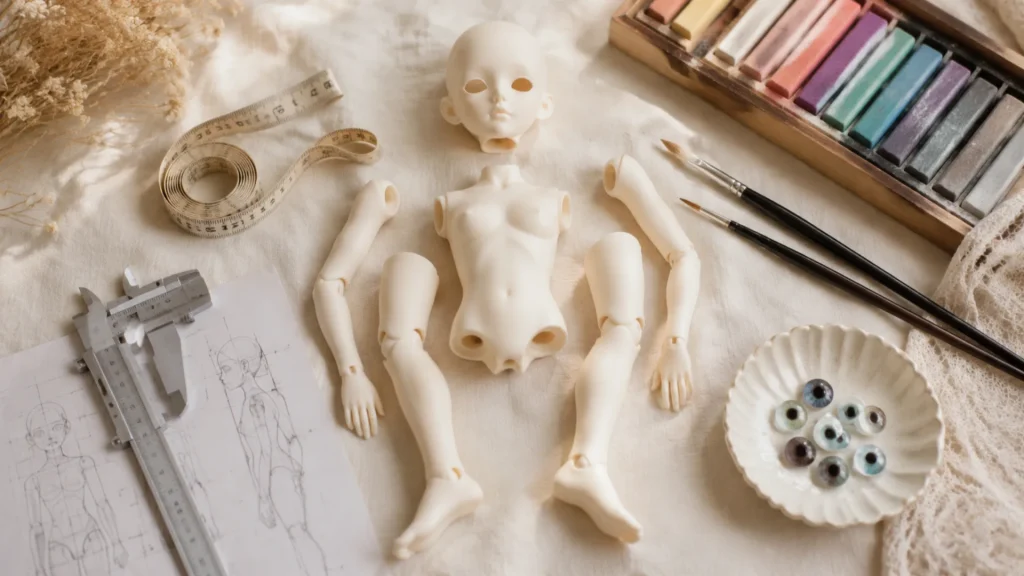
BJD Library: A Beginner-Friendly Guide to Ball-Jointed Dolls
Quick answer: A BJD, or ball-jointed doll, is a poseable art doll made from separate jointed parts, usually held together by internal elastic stringing. Many collector-grade BJDs are made from polyurethane resin and can be customized with faceup, wigs, eyes, outfits, shoes, and accessories. However, materials, sizes, included items, wait times, and compatibility vary widely by artist, maker, and product listing.
This BJD Library is a practical reference for beginners, collectors, and customizers who want to understand ball-jointed dolls before buying, styling, or caring for one. It explains the most important BJD terms, common beginner mistakes, size and compatibility issues, blank versus fullset options, authenticity concerns, and basic resin care.
Editorial note: This guide is written as a general educational reference. BJD terminology, maker practices, dealer relationships, measurements, and included items can change over time. Always check the current product listing, maker specifications, and seller information before ordering.
In This Guide
- BJD quick definitions and glossary terms
- Five things to check before buying your first BJD
- Common beginner mistakes to avoid
- BJD sizing and compatibility basics
- Blank BJD dolls versus fullset BJD dolls
- BJD market terms, authenticity, and recast warnings
- Anime, kawaii, gothic, fantasy, animal, and realistic BJD styles
- First-time buyer checklist
- Basic BJD care and maintenance
Introduction to the BJD Hobby
Welcome to the BJD Library, a comprehensive reference resource designed to help you navigate the world of ball-jointed dolls. Whether you are looking for your first doll, exploring customization options, or learning how to care for your collection, this guide outlines the core concepts of the BJD hobby. You can return to this library as a long-term reference as your collection grows.
A BJD, or ball-jointed doll, is a poseable art doll constructed with separate jointed parts. These parts are typically held together by an internal elastic stringing system. While many collector-grade BJDs are cast in polyurethane resin, materials, engineering, and sizes vary widely by artist and manufacturer.
For beginners, entering the BJD community can feel overwhelming due to specialized terminology, wait times, and complex sizing. Buying a BJD is rarely like purchasing a standard, off-the-shelf toy. Instead, it is closer to commissioning or collecting a piece of customizable art. This guide provides the foundational knowledge you need to make informed decisions, understand sizing and compatibility, and avoid common beginner pitfalls.
BJD Quick Definitions / Glossary
To help you understand the terminology used throughout the community, here is a quick reference glossary:
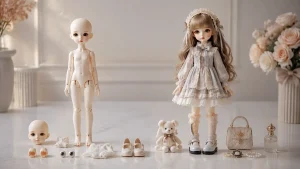
- Blank BJD doll: Usually a doll that is assembled but unpainted and unstyled, often without makeup, eyes, hair, clothing, or shoes unless otherwise stated by the seller.
- Fullset BJD doll: A doll sold as a more complete package, which may include a painted face, eyes, wig, outfit, shoes, or other styling pieces depending on the maker, release, and product option.
- Faceup: The painted makeup and facial details on the doll’s head, including eyebrows, eyelashes, lips, shading, and blushing.
- Recast: An unauthorized, counterfeit copy of an artist’s original sculpt produced by copying a genuine doll.
- COA (Certificate of Authenticity): Documentation provided by the official manufacturer or artist to help prove the doll’s authenticity.
- Layaway: An installment payment plan offered by some dealers and manufacturers to split the cost over several months.
- Scale: The general height classification of the doll relative to human proportions, such as 1/3, 1/4, or 1/6. Scale labels are not perfectly standardized.
- Stringing: The internal system of elastic cords and S-hooks that holds the doll’s limbs together and allows posing.
- Yellowing: The natural discoloration process that resin can undergo over time, often accelerated by ultraviolet light, heat, and age.
Start Here: 5 Things to Check Before Buying Your First BJD
If you are about to purchase your first doll, verify these five critical details before placing an order:
- Authenticity: Make sure you are purchasing directly from the artist, an authorized dealer, or a verified secondhand seller with appropriate supporting proof, such as a Certificate of Authenticity when available.
- Listing inclusions: Carefully read the description. Double-check whether the listing is for a blank doll, a head-only item, a body-only item, or a fullset. Do not rely on styled promotional photos alone.
- Physical measurements: Do not buy accessories based on scale category alone, such as “1/4.” Verify the exact measurements in millimeters for the doll’s head, feet, bust, waist, hips, and other relevant body parts.
- Production and wait times: Confirm the processing timeline. Custom or made-to-order dolls can take several months to ship, and some orders may take longer depending on maker workload and selected options.
- Care requirements: Be prepared for long-term care. Resin can be sensitive to ultraviolet light, dark fabric dyes, heat, friction, and abrasive cleaning.
Common Beginner Mistakes to Avoid
These scenarios are synthesized from common community experiences and owner discussions to help new collectors avoid costly beginner errors.
Mistake 1: The “Naked Blank” Misunderstanding
The scenario: A collector orders a doll based on a beautifully styled promo photo showing a character with styled hair, custom eyes, clothing, and makeup. When the package arrives months later, it contains a fully assembled, unpainted, skin-toned resin doll with no eyes, no hair, and an unpainted face.
The lesson: Always read the listing description rather than relying on promotional photos. Unless labeled and described as a fullset, many BJD dolls are sold as a blank BJD doll, meaning unpainted and unstyled. If a product listing excludes the head or only includes the body, it is typically designated as “head-only” or “body-only,” which is different from a complete but blank doll. Fullset contents also vary by maker and release, so always confirm whether eyes, wig, shoes, outfit, faceup, body blushing, and accessories are specifically listed as included.
Key takeaway: Promotional photos show styling possibilities. The product description tells you what you are actually buying.
Mistake 2: The 1/4 Scale Clothing Mismatch
The scenario: A buyer orders a standard “1/4 scale” outfit for their slim, stylized 1/4 doll. The clothes arrive, but the pants will not pull over the hips and the shirt sleeves are too short because the outfit was patterned for a different type of 1/4 or MSD-like body.
The lesson: Standardized scale labels, such as 1/4 or 1/3, only indicate a general height range. You must match the doll’s specific chest, waist, hip, shoulder, arm, leg, and foot measurements against the clothing pattern’s dimensions before buying, and our bjd clothing size guide covers all the sizing details you need.
Key takeaway: Scale labels are not enough. Exact body measurements matter more than the scale name.
Mistake 3: The Dark Fabric Stain
The scenario: A collector dresses their new resin BJD in a dark navy or black outfit. After leaving the outfit on the doll for a week, they remove it and find dark grey dye lines set into the resin around the waist and wrists.
The lesson: Highly pigmented dark fabrics can transfer dye to polyurethane resin, especially when tight-fitting. Pre-wash dark fabrics when possible, test for dye transfer, and consider using protective white body stocking liners or limiting wear time. Washing fabric does not eliminate staining risks entirely.
Key takeaway: Dark outfits can stain resin. Use liners, test fabrics, and avoid long-term contact when possible.
Mistake 4: The “Gazing into the Void” Eye Choice
The scenario: A buyer purchases a pair of 16mm replacement eyes for a mature-sculpt doll. While the eyes fit the eye wells, the oversized iris fills too much of the eye opening, giving the doll a blank or unfocused expression.
The lesson: Eye fit is determined by both the outer diameter and the iris size. Mature or realistic sculpts often need smaller irises to maintain a natural, focused expression, while anime-style BJD dolls may use larger irises to create an animated or expressive look.
Key takeaway: Eye size is not only about outer diameter. Iris size and sculpt style also affect expression.
BJD Sizing & Compatibility Decision Matrix
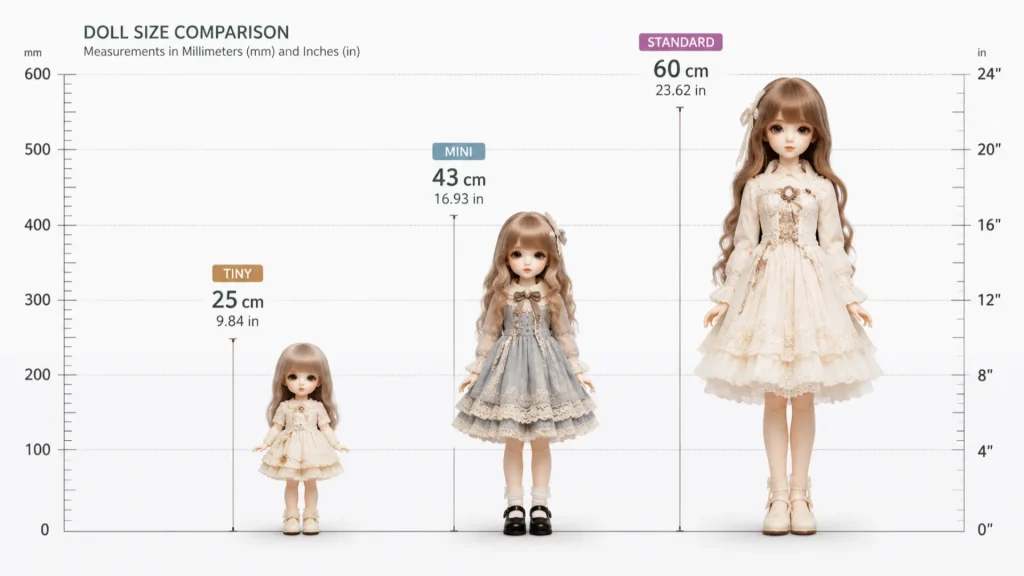
BJD sizes are generally categorized by scale, but actual body proportions vary by maker, sculpt, body type, head size, and design style. Use this table as a practical BJD size guide to understand the general sizing landscape.
Important note: The measurements below represent common approximate ranges. They should not serve as the sole basis for purchasing accessories. Always measure your specific doll and check current manufacturer specifications before buying wigs, eyes, clothes, shoes, stands, or accessories.
How to Measure Your Doll
To ensure a better fit for accessories, use these standard measurement methods:
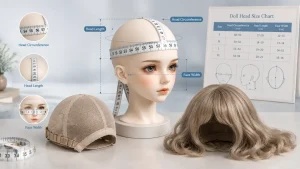
- Head circumference: Wrap a flexible tape measure horizontally around the doll’s head, following the seller’s stated measurement path whenever one is provided. A common starting path is just above the ears and across the brow or forehead area. This measurement helps you identify a suitable BJD wig size range, but it does not guarantee fit by itself.
- Eye and iris size: Measure the diameter of the doll’s eye socket opening. The total eye size, such as 14mm, refers to the eye itself, while the iris size refers to the colored center.
- Foot length and width: Measure from the back of the heel to the tip of the longest toe, and across the widest part of the sole. Match these numbers to the inner dimensions of BJD shoes.
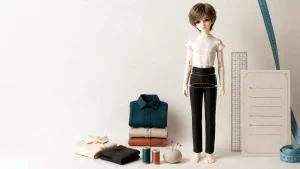
- Bust, waist, and hips: Measure the circumference of these areas to check clothing compatibility. Do not assume all dolls of the same scale share the same proportions.
| Scale Category | Average Height | Head Circumference / Wig Size | Eye Size | Compatibility Notes & Proportions |
|---|---|---|---|---|
| Tiny / 1/6 / YoSD-like | Approx. 25–30 cm | Approx. 6–7 inches | Approx. 12mm–14mm | Often childlike or compact in proportion. Easy to handle and store, but outfits may require precise, thin fabrics to sit naturally. |
| Mini / 1/4 / MSD-like | Approx. 40–45 cm | Approx. 7–8 inches | Approx. 12mm–16mm | Highly varied. Can include slim mature bodies and classic, chunkier MSD-like shapes. Clothes are not always cross-compatible. |
| Standard / 1/3 / SD-like | Approx. 55–65 cm | Approx. 8–9 inches | Approx. 14mm–18mm | Strong visual presence and solid weight. Often better for detailed styling, but may require more display space and sturdy support. |
| Large / 70cm+ / SD17-like | Approx. 68–75+ cm | Approx. 8–9.5 inches | Approx. 10mm–14mm | Often mature, tall, or muscular in proportion. Heavy resin parts require careful handling. Shoes, stands, and clothing must be checked by exact measurements. |
Measurement reminder: Exact sizing varies by maker, sculpt, body type, head size, and proportion. A 1/4 doll from one maker may not fit clothes, wigs, eyes, or shoes made for another 1/4 doll.
Cost and Customization Comparison: Blank vs. Fullset
Deciding how to buy your first ball-jointed doll depends on your budget, patience, and interest in customization. This matrix compares two common options: a blank BJD doll versus a fullset BJD doll. These price ranges are general estimates for the entry-to-mid market and will vary by manufacturer, artist, doll size, release type, and production year.
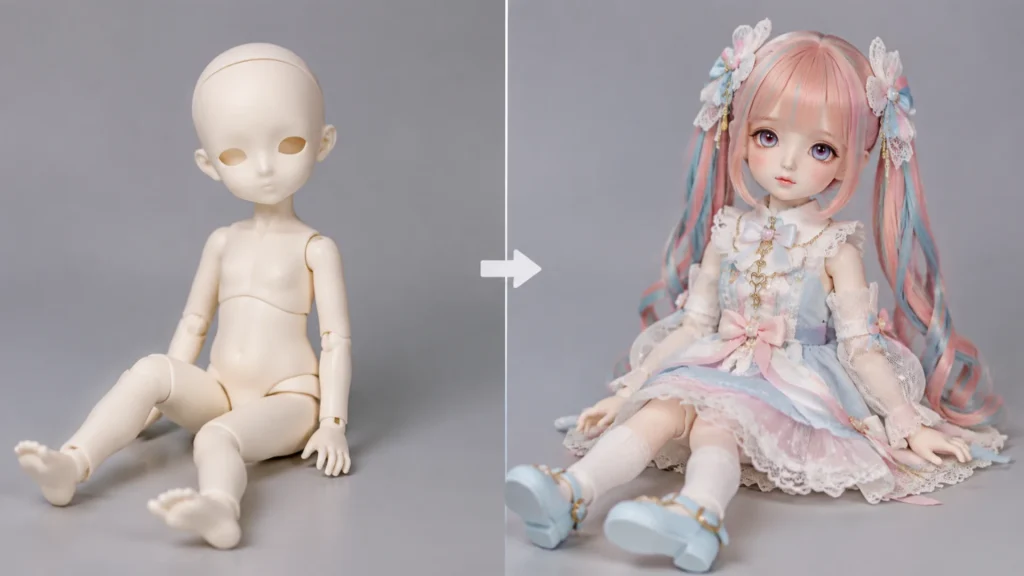
| Feature / Consideration | Blank BJD Doll | Fullset BJD Doll |
|---|---|---|
| Average Initial Cost | Usually lower base price, often around $150–$500 depending on size, maker, and release. | Usually higher initial cost, often around $350–$900+ depending on styling complexity, size, maker, and included items. |
| Customization Effort | High. You may need to source or create the faceup, wig, eyes, clothing, shoes, and accessories. | Lower. The doll may arrive styled and closer to display-ready, though you may still need to install eyes, adjust clothing, or style the wig. |
| Required Skills / Tools | May require faceup brushes, pastel pigments, acrylic paints, and a spray sealant such as Mr. Super Clear (MSC). Warning: Spray sealants contain hazardous chemical fumes. Always apply in well-ventilated outdoor areas, wear an organic vapor respirator mask, avoid humid weather, and keep away from open flames. Beginners may also commission a professional faceup artist. | Minimal compared with a blank doll. However, you may still need to install BJD eyes, style the wig, adjust elastic string tension, or handle the delicate faceup carefully. |
| Creative Freedom | High, though still bounded by the doll’s sculpt, resin skin tone, budget, material compatibility, and available parts. | More limited to the artist’s predefined design and theme. |
| Resale Value Factors | Depends heavily on the doll’s authenticity, condition, sculpt popularity, and the quality of custom styling or commissioned work. | May appeal to collectors seeking rare, limited, or discontinued releases, especially when original items and documentation are preserved. |
Buying reminder: “Fullset” does not always mean every item in every photo is included. Always check whether faceup, wig, eyes, outfit, shoes, accessories, body blushing, and props are specifically listed in the selected option.
Understanding the BJD Market: Industry Terms & Buying Realities
When navigating the BJD community, you will encounter terms related to production schedules, ordering systems, and authenticity.
- Pre-orders and processing times: Unlike standard retail toys, many BJD manufacturers operate on a made-to-order or limited-order basis. A pre-order window may open for a limited time, after which production begins. Processing times commonly range from several months to longer depending on production workload, selected options, and whether you request a BJD faceup from the company.
- Official dealers: To buy an authentic doll, it is usually safest to purchase directly from the maker’s website or through authorized dealers listed by the brand at the time of purchase. Dealer relationships can change over time, so any dealer example should be verified against the specific doll brand’s current official dealer list before ordering.
- Layaway: Some dealers and makers offer layaway plans, allowing you to pay for your doll in monthly installments. The doll is usually shipped only after the final payment is cleared.
- The secondhand market: Collector forums, marketplace groups, social platforms, and private sales are commonly used for buying pre-owned dolls. When buying secondhand, ask for verification photos showing the doll next to a handwritten note with the current date, as well as supporting proof such as order history, owner records, original packaging, or a COA when available.
- Artist recast warning: A recast is an unauthorized, counterfeit copy of an artist’s original sculpt, produced by taking a mold of a finished doll. Recasts violate artist rights, harm independent makers, and are banned from many major community forums and events. Many official new dolls come with a Certificate of Authenticity and original packaging. However, older, secondhand, or independent artist dolls may occasionally lack complete documents. Buyers looking for an authentic resin BJD in the secondhand market should carefully verify provenance through order histories, owner records, seller reputation, and community guidance.
Aesthetics and Style Profiles
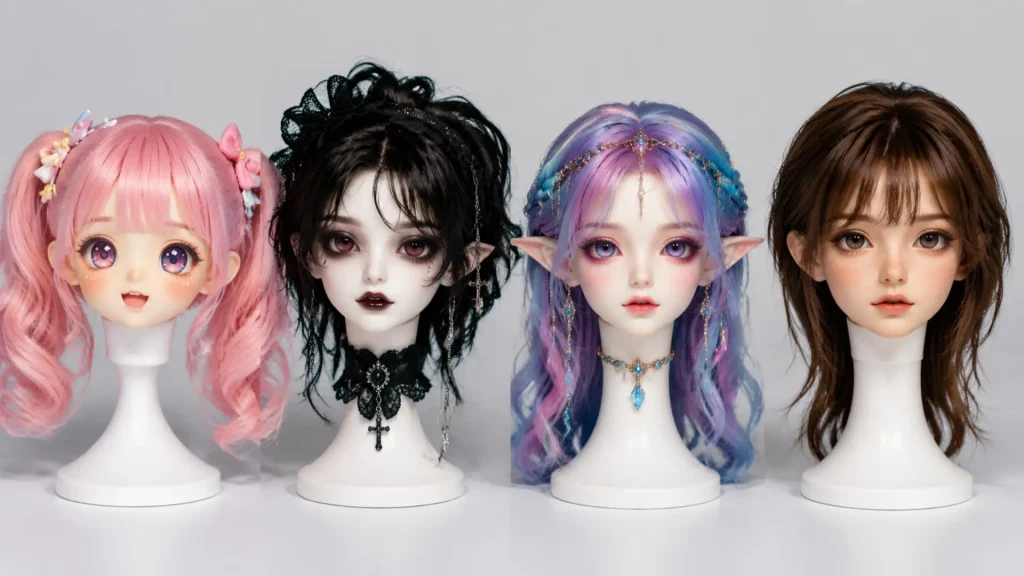
BJDs are often discussed through visual style categories. Understanding these design directions can help you choose compatible accessories, manage expectations, and anticipate care needs.
Anime and Kawaii Styles
Design criteria: anime BJD dolls and kawaii BJD dolls often feature large or simplified eye shapes, softer facial contouring, small noses, and expressive mouths. While many traditional BJDs are made from cast resin, adjacent doll types such as vinyl anime dolls may use different materials and internal structures, which have distinct care requirements compared with resin.
Practical customization: These styles often rely on larger-looking irises to achieve an expressive look. High-contrast wigs, pastel outfits, and character-driven styling are common. Vinyl anime dolls and resin dolls can have different staining and care concerns, so material should always be checked before applying care advice.
Gothic and Vampire Styles
Design criteria: gothic BJD dolls and vampire BJD dolls often focus on dramatic styling, pale or unusual resin tones, deep-set eye shapes, fanged mouth sculpts, melancholic expressions, dark clothing, and theatrical visual themes.
Practical customization: Pale resin colors can make dye staining from dark clothing especially noticeable. Gothic wardrobes featuring black velvet, dark lace, dark leather, or heavily dyed fabrics may require protective body liners to reduce the risk of stains.
Fantasy and Animal Styles
Design criteria: fantasy BJD dolls and animal BJD dolls may incorporate non-human parts such as elf ears, horns, wings, hooves, paws, tails, or fantasy limbs. Some modern makers use magnetic attachment points for swap-out parts.
Practical customization: Magnetic parts are rarely cross-compatible between different brands because magnet polarity, socket depth, sculpt shape, and engineering vary. Complex body blushing on fantasy or animal parts can also scratch or wear off during posing.
Realistic Styles
Design criteria: Realistic-style BJDs mimic human anatomy and facial structure more closely, often featuring detailed jawlines, realistic eye shapes, sculpted noses, and mature proportions. These styles are common in many male BJD dolls and female BJD dolls in the 1/3 and 70cm categories.
Practical customization: Realistic sculpts may look better with lower-dome eyes, smaller irises, and more tailored clothing. Generic MSD or SD clothing can appear loose, short, or badly proportioned if it does not match the doll’s exact body measurements.
Tiered Priority Checklist for First-Time BJD Buyers
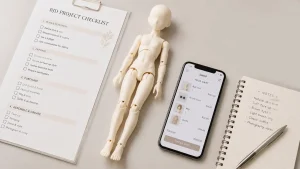
Before finalizing your order, step through this checklist to make sure you know exactly what you are purchasing.
Tier 1: Core Essentials — Must Confirm
- Authenticity check: Am I buying directly from the artist, an authorized dealer, or a verified secondhand owner with supporting proof of purchase or a Certificate of Authenticity when available?
- What is included in the box? Is the head, body, or faceup included? Have I confirmed whether “nude doll,” “blank doll,” “head-only,” and “body-only” are being used correctly in this listing?
- Processing and shipping time: Have I checked the production wait time and shipping expectations before ordering?
Tier 2: Styling and Fit — Recommended to Confirm
- Wig compatibility: Have I measured the doll’s head circumference in inches to choose the correct BJD wig size?
- Eye size: Have I checked the recommended eye and iris size in millimeters to avoid an unfocused or expressionless look?
- Clothing proportions: Have I compared the doll’s exact chest, waist, hip, shoulder, and limb measurements against the clothing measurements rather than relying only on scale labels?
- Footwear fit: Do the shoes match the physical foot length and width of this specific body?
Tier 3: Display and Maintenance — Advanced Planning
- UV-safe storage: Do I have a display space away from direct sunlight to help slow resin yellowing?
- Stain prevention: Do I have protective white body stockings, wraps, or other barriers for dark outfits?
- Support stands: If purchasing a 1/3 scale or 70cm doll, do I have a suitable stand or safe display setup to reduce the risk of accidental falls?
First Doll Decision Path
To help you decide on your first purchase, follow this path based on your styling preferences and budget:
[Is Customizing Your Goal?]
   |
   +---> Yes: Select a Blank BJD Doll.
   |          - Pros: Creative control and usually lower base cost.
   |          - Needs: Faceup planning, eyes, wig, clothing, shoes, and accessories.
   |
   +---> No:  Select a Fullset BJD Doll.
              - Pros: More coordinated styling and closer to display-ready.
              - Needs: Higher upfront budget, careful option checking, and patience for production time.
Essential BJD Care and Maintenance Guide
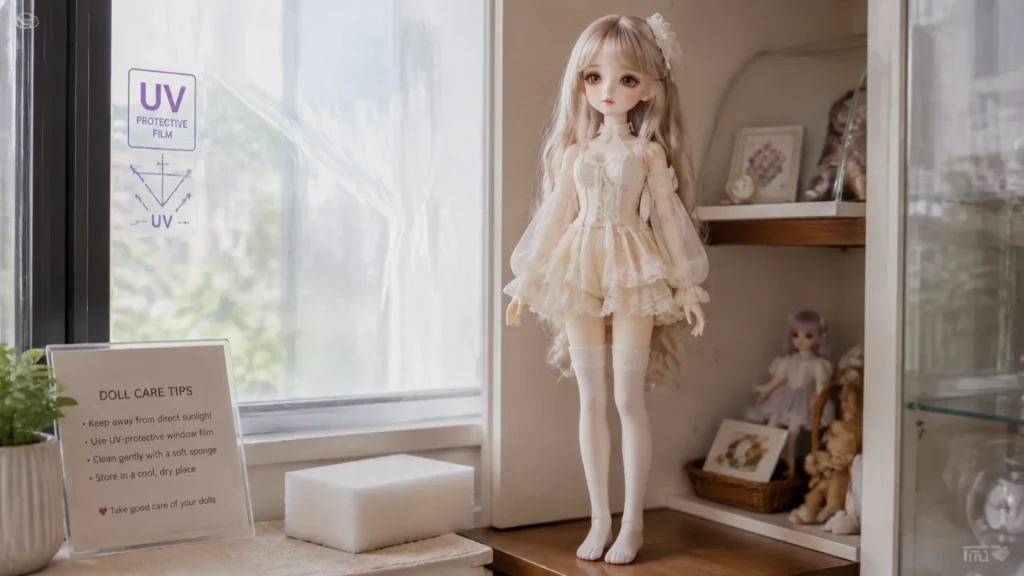
Polyurethane resin is a synthetic polymer material that can yellow or change tone over time, especially with ultraviolet exposure, heat, and age. Basic BJD care helps extend the life of your doll and protects custom faceup, blushing, and surface finishes.
Preventing Yellowing and UV Damage
To slow the natural discoloration of synthetic resin:
- Display your dolls away from windows, glass doors, skylights, and direct sunlight.
- Avoid using high-heat lights near display shelves.
- Store dolls in a climate-controlled room when possible, because excessive heat can accelerate material changes.
Handling and Faceup Preservation
- Wash your hands: Skin oils, lotions, and dirt can transfer to the doll’s surface, attracting dust and wearing away sealants.
- Avoid friction: Do not rub the doll’s face against hard surfaces. When traveling, use a soft face protector cap to help protect eyelashes, eyebrows, and painted details from scratching.
- Cleaning surface marks: Use a clean, dry melamine foam sponge, such as a Magic Eraser, to gently buff away light scuffs on unpainted resin areas only. Warning: Avoid sanding or melamine foam on faceups, body blushing, tattoos, coated parts, tan resin, dark resin, or delicate finishes unless you accept possible finish or color changes. Always test in an inconspicuous area first.
- Avoid harsh solvents: Do not use chemical solvents such as acetone or nail polish remover on painted faceups, because they can strip sealant and paint immediately.
Recommended Next Steps
After reading this BJD Library, the most practical next step is to continue learning through focused reference topics. Beginners usually benefit from studying BJD size comparisons, glossary terms, buying checklists, resin care basics, wig sizing, eye sizing, clothing compatibility, and authenticity guidance before placing an order.
- Compare common BJD sizes before choosing a scale.
- Review BJD glossary terms before reading product listings.
- Use a first-doll buying checklist before checkout.
- Learn basic resin BJD care before long-term display.
- Check wig, eye, clothing, and shoe measurements before buying accessories.
Conclusion: Your Next Steps
Entering the BJD hobby is a journey that rewards planning and patience. To set yourself up for success, follow this sequence:
- Verify authenticity: Make sure your chosen doll is authentic and comes from a legitimate source.
- Confirm included items: Check the product details page so you know exactly what parts and styling elements are included.
- Double-check measurements: Match your doll’s specific millimeter proportions to clothing, wigs, eyes, shoes, and accessories.
- Establish a care plan: Prepare a safe, UV-protected display space and use stain-prevention measures for dark outfits.
Use this BJD Library as a reference guide whenever you scale up your collection, compare a new doll, plan a customization project, or prepare for your first BJD purchase.